


Blog post
'Keep fighting': Monica Zoratti discusses her journey with scleroderma and kidney failure — and why people should never give up on getting better
- Medically reviewed by
- Shahzia Lakhani
- Last updated
- March 17, 2026

Anyone living with kidney failure knows how challenging everyday life can be. But for Monica Zoratti, who lives with both kidney failure and scleroderma, the challenges she has faced have been monumental.
In 2023, she was diagnosed with scleroderma, a complex disease that involves hardening and tightening of the skin. The following year, she experienced a scleroderma renal crisis (SRC), a rare but dangerous complication of the disease in which symptoms of sudden, severe high blood pressure and rapid loss of kidney function occur. As is the case for many patients, Monica's SRC appeared without warning, leaving her blindsided. After all, her entire ordeal began with what seemed like a simple cold.
"After New Year's Day [2023], I started not feeling too well," Monica said. She took a COVID test, which was positive. Then, a few months later, Monica started having difficulty swallowing and walking.
Doctors initially believed her symptoms were likely a result of long COVID — an explanation Monica was not so sure about. "My body was telling me something different," she said. She hesitantly accepted her doctor's explanation, but after her pain and symptoms continued, doctors decided to take a closer look at Monica's immune system.
"I came up as ANA positive," Monica said, referring to an antinuclear antibody (ANA) test that was given to her by her doctor. This test detects whether someone has antinuclear antibodies that attack healthy cells, potentially indicating the presence of an autoimmune disorder, which is when the immune system attacks the healthy cells of a person's organs and tissues by mistake. "At that point, I started freaking out," Monica said, describing her reaction to the test results.
Her doctor sent her to a rheumatologist — a doctor who specializes in diagnosing and treating autoimmune and inflammatory conditions. The rheumatologist performed more tests — a scleroderma 12 panel, specifically, and ultimately diagnosed Monica with scleroderma, an autoimmune disease, in July 2023. Monica was given medicine to manage the condition but continued to feel ill. "My energy [level] was very low," she said. "I felt like I was dying."

In January 2024, Monica's health took a turn for the worse. She called her sister and her brother-in-law, Digna and Lon Davis, telling them she couldn't breathe and that she needed to go to the hospital. Her family rushed her to the emergency room, where she was given the devastating news: her kidneys had failed after she experienced an SRC. Reeling, Monica said it was very difficult to wrap her mind around what was happening to her. "I had to accept my sickness [of scleroderma] and then also accept that I had lost my kidneys," she said, referring to her kidney failure.
Monica had to immediately begin dialysis, which she initially did in a center before switching to peritoneal dialysis at home. The staff at the dialysis center informed Monica about the American Kidney Fund's Health Insurance Premium Program (HIPP), saying the program may be able to assist her with Medicare supplemental costs. Lon and Digna credit HIPP with allowing her to pursue a stem cell transplant at the Mayo Clinic in Jacksonville, Florida, a procedure that Monica said brought her hope at a time when she had lost hope.
Although it is not a standard form of treatment for scleroderma, stem cell transplants — which involve the replacement of a person's blood cells with a graft — have been found to help people like Monica with severe cases of the disease.
Still, a successful stem cell transplant was not a guarantee. The doctors at Mayo Clinic had never performed an autologous stem cell transplant on an end-stage kidney disease patient before, as someone with kidney failure is generally seen as having an immune system that is too compromised. Although Monica's hematologist felt the transplant was a step worth taking, doctors did not mince words — she could die if the procedure went awry. But for Monica, who already felt like she was dying and was told exactly that by her doctors, that risk was worth taking. "[I'd already] been there," she said, referring to being told that her days were numbered. "I know the feeling, so I'm going to take my chances."
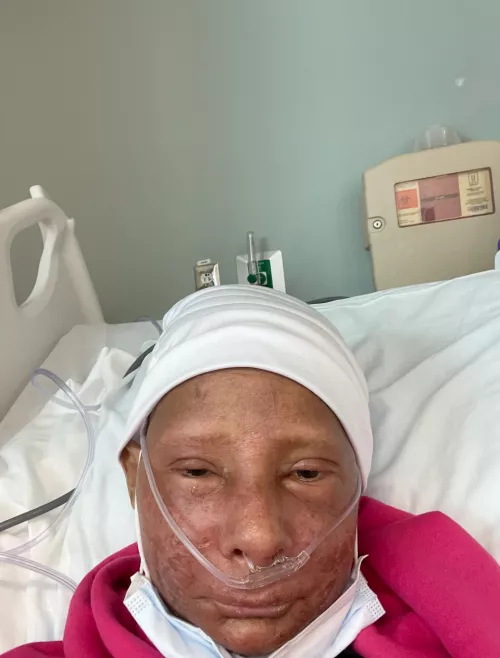
In September 2024, she became the first patient at the Mayo Clinic in Jacksonville with both kidney failure and scleroderma to receive a stem cell transplant. The procedure went well; however, before she felt relief, Monica faced several health challenges. "The first month [after the stem cell transplant] was the worst time for me," she said. "I was in the intensive care unit for three weeks. I went to a rehabilitation center to learn how to walk again. I [also] wasn't eating, so doctors put a feeding tube in me." In addition, she had issues with her blood pressure and had to have it checked monthly. Thankfully, her blood pressure started to come down around March 2025. "I started feeling better little by little," she said.
Today, over a year after the stem cell transplant was performed, Monica's scleroderma is in remission, according to blood tests. To qualify for a kidney transplant, she must completely recover from the stem cell transplant, which substantially weakens the immune system. Although her immune system has gotten stronger, it has not fully recovered, but Monica is looking forward to the day she qualifies and can receive a new kidney. "I will be so glad to be out of dialysis, and to be normal," she said, mentioning how she misses being able to go out of town without bringing all her dialysis equipment with her.
In the meantime, while she waits for a kidney transplant, Monica said she is grateful for the support she has received from her nephrologist, dialysis center, and from the American Kidney Fund, and that she is thankful to simply be alive. She urges other people with scleroderma and kidney failure to keep going, even when it gets tough. "Keep fighting," she said. "I've [encountered] a lot of bumps [in the road], but people should fight and believe in themselves."
Click here to learn more about the HIPP program.
Visit kidneyfund.org/kidney-donation-and-transplant to learn more about transplantation and organ donation.

Related articles

Blog post
Three posters investigate common barriers to receiving kidney care and the effectiveness of kidney education resources at the American Society of Nephrology's (ASN) Kidney Week 2026


Blog post
During National Dialysis Technician Recognition Week, dialysis technician and kidney patient Stephon Harris discusses why he was drawn to helping people get the same treatment he needs to live.

Press release
Emergency grants of $250 from AKF are available for dialysis and post-transplant patients living in Kauai, Honolulu and Maui counties