Do you know the cause of your kidney disease?
Your healthcare team can help you find the cause of your kidney disease. Use this tool to build a unique conversation starter to bring to your next doctor's appointment.
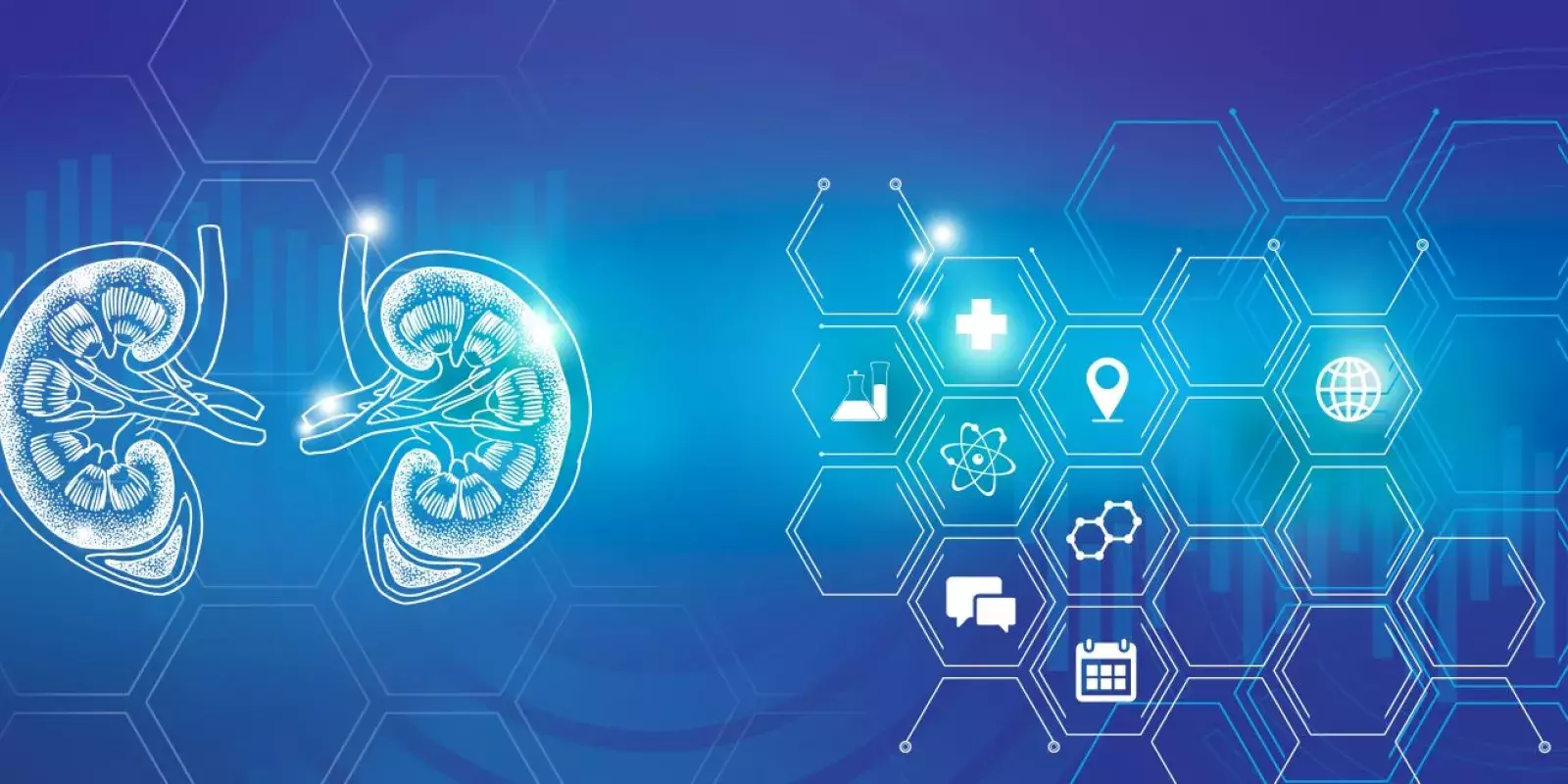

Treatments and advanced technologies are changing what's possible for people with chronic kidney disease (CKD). Learn about FDA-approved innovations and promising research still in development. Stay informed, talk to your doctor, explore what's on the horizon, and do your own research to be your best advocate.

If you are in the early stages of kidney disease, learn about ways to prevent disease progression or delay kidney failure, also called end-stage renal disease (ESRD) or end-stage kidney disease (ESKD).
The PROACT 1 clinical trial is testing whether rilparencel, a cell therapy made from a patient’s own kidney cells, can help stabilize kidney function and delay progression to kidney failure in people with advanced CKD and type 2 diabetes. This Phase 3 study is exploring a possible new option for people at high risk of reaching end-stage kidney disease.
The FDA has approved Biobeat's cuffless blood pressure monitoring system for use in adults. The system uses a wireless sticker patch that patients attach to their chest to track blood pressure over a 24 hour period. The device sends the blood pressure readings to a mobile app and creates a report for healthcare professionals. This technology can look at blood pressure patterns throughout the day and while patients sleep to help healthcare professionals decide whether medicines need to be adjusted.
Many of these treatments are still being studied or newly approved. Be sure to talk to your doctor about whether they're right for you and check back as new options become available.
Research is ongoing for new medicines that help protect kidneys, especially for people at higher risk.

Semaglutide
Three randomized clinical trials found that semaglutide (e.g., Ozempic®, Wegovy®, Rybelsus®) reduced the risk of major kidney complications in people with cardio-kidney-metabolic disease. The findings suggest semaglutide may help protect kidney health in people with and without diabetes. The FDA also approved injectable semaglutide to help reduce the risk of CKD worsening, kidney failure, and death in adults with type 2 diabetes and CKD. This medicine was first used to help manage blood sugar, but research shows it may also help protect kidney health in some people.
Finerenone
The FIND-CKD trial found that finerenone (Kerendia®) slowed the decline in kidney function in adults with CKD who did not have diabetes. The study also found a lower risk of combined kidney and cardiovascular complications compared with a placebo. In September 2026, the FDA also approved finerenone for adults with CKD associated with type 1 diabetes. The approval is based on evidence that finerenone reduces urine albumin-to-creatinine ratio (uACR), which is expected to reduce the risk of kidney function decline and kidney failure.
Tirzepatide
The SURPASS trials found that tirzepatide (e.g., Zepbound®, Mounjaro®) was associated with lower levels of albuminuria, or protein in the urine, in people with type 2 diabetes. Tirzepatide targets two gut hormone pathways, which help regulate blood sugar. These findings add to growing research on how diabetes medicines may also help protect kidney health.
The ASSENT initiative
This initiative is bringing together researchers, patients, clinicians and regulators to improve clinical trials for Alport syndrome. The initiative is studying global patient data to identify measurements that can predict disease progression earlier, which may help speed up research on targeted treatments for this genetic kidney disease.
Ravulizumab
A new phase 3 trial is testing whether a single dose of the medicine ravulizumab-cwvz (Ultomiris®) can help prevent acute kidney injury (AKI) in people with CKD who are having heart surgery. The study focuses on reducing kidney damage caused by inflammation during surgery, which is common and can lead to serious complications.
Dapagliflozin
Recent research suggests that the medicine dapagliflozin (Farxiga®), an SGLT2i, may significantly slow CKD progression. It could delay kidney failure by about 6 to 7 years compared to standard treatment, helping people with CKD live longer and healthier lives and potentially delaying or preventing the need for dialysis or kidney transplant. Dapagliflozin is also being studied in children with Alport syndrome. Researchers are also studying it in autosomal dominant polycystic kidney disease (ADPKD) to learn whether it may help slow kidney function loss and cyst growth.
Plain language summaries explain research studies in clear, everyday language. They are designed to help patients and care partners understand what a study was about, what researchers found, and what the results may mean without needing to read a technical journal article. These summaries can be a helpful way to explore new developments in kidney care, including emerging treatments and rare disease research. Learn more.
Research is underway to improve treatments for the following:
Break Wave lithotripsy is a new non-invasive treatment for kidney stones that uses low-pressure ultrasound waves to break stones into smaller pieces that may pass more easily. In the SOUND trial, the treatment met its main safety and effectiveness goals, and patients did not need anesthesia. This innovation may give some people with kidney stones a less invasive treatment option that can be done in an office setting.
Dotinurad is a newer medicine designed to help the kidneys remove more uric acid from the body. It is already approved in Japan and China. This research may help show whether dotinurad could become another option for managing gout and high uric acid.
Veverimer is an oral medicine being studied for adults with CKD and metabolic acidosis, a condition that happens when too much acid builds up in the body. It is designed to help remove acid and raise bicarbonate levels. Researchers are now studying whether it can safely help people with moderate-to-severe CKD in the Phase 3 REVIVE trial.
A recent study shows that vadadustat (Vafseo®), an oral medication taken once daily, is just as effective as injectable treatments for managing anemia in dialysis patients.
Breakthroughs in kidney disease innovation are on the horizon. Sign up to receive emails from the American Kidney Fund. We spotlight the latest progress and ways to empower the kidney disease community to benefit from every leap forward.
There are more than 90,000 people on the waiting list for a kidney transplant and there aren't enough kidneys for everyone who needs them. However, scientists are exploring additional ways to make transplants more accessible. Only about 1 in 3 people waiting received a transplant last year.

The AWAKE study is a Phase 3 clinical trial testing whether ravulizumab can help reduce delayed graft function (DGF) in adults at high risk for this complication after receiving a deceased donor kidney transplant. DGF happens when a transplanted kidney does not start working right away, which may mean the person needs dialysis soon after surgery. Researchers are studying whether ravulizumab can prevent or reduce the severity of delayed graft function and help patients reach freedom from dialysis sooner after transplant.
The TRANSCEND study is a Phase 3 clinical trial testing felzartamab in adults with kidney transplants who have late antibody-mediated rejection (AMR), a serious immune response that can damage the transplanted kidney. This research is important because AMR has limited standardized treatment options and can threaten the long-term survival of a transplanted kidney.
The Room Temperature Machine Perfusion (RTMP) device could make more kidneys available for transplant. Many donated kidneys are not used today because they can be damaged during storage. This device keeps kidneys healthy longer and lets doctors test how well they work before surgery. The FDA recently gave the device breakthrough status, which speeds up review of technologies that could improve patient care.
Scientists are working on developing lab-grown kidneys and new machines to give people with kidney failure options other than going on dialysis and waiting for a kidney transplant. Artificial kidneys grown from a patient's own cells are designed to work like real kidneys without the risk of rejection. They could be available as soon as 2030.
Symptom management can vary from person to person. These treatments may not be available to everyone or may still be under review. Ask your care team what's currently recommended for your situation.

Mayo Clinic researchers use 3D bioprinters to create living models of skin, cartilage, and organ tissue using medical imaging and patient-specific cells. These tissue models help scientists study disease, test treatments, and develop future transplant solutions. While still in development, this technology offers real hope for patients facing organ failure or donor shortages.
Another innovation researchers are testing to make kidney transplants more accessible is through xenotransplantation. Xenotransplantation uses cells, tissues, or organs from animals to treat medical conditions in humans. The first surgery in a clinical trial testing the safety of gene-edited pig kidney transplants in patients with end-stage renal disease was recently performed at NYU Langone Health.
Xenotransplantation bridging
Another innovation researchers are studying to make kidney transplants more accessible is xenotransplantation, which uses cells, tissues, or organs from animals to treat medical conditions in humans. In a recent case, a man lived without dialysis for 271 days after receiving a genetically edited pig kidney before later receiving a donated human kidney. Researchers say the case shows that pig kidney transplants may one day serve as a bridge to help some people stay off dialysis while they wait for a human donor kidney.
A recent trial is testing a one-time cell therapy (MDR-101) that could help kidney transplant recipients live without anti-rejection drugs. Conducted between March 2018 and April 2024, the treatment uses the donor's stem cells (special cells that can turn into many different types of cells in the body) to retrain the immune system to accept the new kidney as its own.
In a recent clinical trial, adults whose immune systems are at high risk of rejecting donor kidneys experienced improved kidney function at 12 months when receiving imlifidase (Idefirix®) prior to transplant, compared to patients who did not receive imlifidase. This medicine addresses the needs of patients who experience long wait times on the transplant list. Studies show this treatment can help their bodies accept a new kidney, making transplants possible for those who need them most. It is currently under FDA review and may be available in December 2026.
Artificial intelligence (AI) in kidney care
AI is opening new possibilities in kidney care. Researchers are exploring how it may help find kidney disease earlier, identify people at higher risk, support treatment decisions, and speed up the search for new therapies. AI may be useful, but it is not always accurate, complete, or right for your situation. If you find kidney health information through an AI tool, check it with your doctor or health care team before making decisions about your care.
For many people with kidney failure, dialysis is a necessary but challenging part of life. Technologies are being developed to improve the dialysis experience by making treatment more efficient, convenient, and accessible.

The Holly™ system, an implantable dialysis device designed to work continuously inside the body, has received FDA Breakthrough Device Designation. This device is designed to mimic natural kidney function by filtering waste, balancing fluids and managing electrolytes, reducing the need for traditional, center-based dialysis. In-human studies may start as early as 2027.
Researchers at UNC-Chapel Hill are developing a new membrane technology to create a portable (easily carried) dialysis device as small as a smartphone. Powered by the patient's own blood pressure, this would dramatically improve quality of life by reducing the time spent on traditional dialysis.
Technological advancements have led to the development of user-friendly home hemodialysis machines equipped with remote monitoring capabilities.
High-volume hemodiafiltration, or HVHDF, is a newer in-center dialysis option that may remove a wider range of waste from the blood than standard hemodialysis. After FDA clearance of the 5008X CAREsystem, Fresenius Medical Care began offering HVHDF at a clinic in Massachusetts.
While new dialysis technologies show promise, some may still be in development or not widely available. Talk to your care team about what's currently offered and what's coming soon.
Genetic testing can help identify rare conditions that affect the kidneys. More than 600 genes have been linked to kidney diseases. Having a clear diagnosis can help your doctor find the right treatments. Genetic testing also plays a crucial role in family planning by helping people with a family history of kidney disease understand their risk and take preventive steps.
If you're curious about testing, ask your doctor about available options, and follow updates as research continues.
Your healthcare team can help you find the cause of your kidney disease. Use this tool to build a unique conversation starter to bring to your next doctor's appointment.


Rare kidney diseases often go undiagnosed or misdiagnosed for years, so getting tested is important. Research is ongoing to find treatments for many rare diseases to prevent and delay kidney disease progression.
The following medicines also lower protein in the urine (proteinuria) and have been approved for use on patients with IgAN:
The FDA granted accelerated approval to atacicept-vymj (Trutakna (R)) to reduce protein in the urine, in adults with primary IgA nephropathy who are at risk of disease progression. Atacicept is a once-weekly injection that targets two immune system pathways including BAFF and APRIL, which are involved in the abnormal immune response linked to IgA nephropathy. Researchers are continuing to study whether the medicine slows long-term kidney function decline.
Roche also announced results from the IMAgINATION study of investigational sefaxersen in adults with primary IgA nephropathy at high risk of disease progression. At 37 weeks, sefaxersen significantly reduced protein in the urine compared with placebo. The study is continuing to evaluate changes in kidney function over two years.
Many treatments in this section are still in clinical trials or under FDA review. If you or a loved one is affected by a rare condition, check with your care team or a specialist about current options.
Each health journey is unique. Taking charge of your kidney health means staying informed. Ask your doctor about new treatments, research clinical trials, and explore digital tools that can help manage your condition. While innovation is happening, it may take time before treatments become widely available. Being an informed patient can help you advocate for yourself. Learn more.
Find a clinical trial
Clinical trials are helping drive new discoveries in kidney health. Explore our tools and information to help you learn about clinical trials, find opportunities to participate, and stay informed about the latest advances.
Explore clinical trials:
If you have a hard time paying for your prescription medicines or treatments, help may be available. Learn more on how you can find financial assistance through prescription assistance programs (PAPs) and resources that may help lower your medicine costs.
The American Kidney Fund has partnered with Antidote Match to help make it easier to find clinical trials that may be of interest to you or your family. Use the search box below to get started!
Each health journey is unique. Taking charge of your kidney health means staying informed. Ask your doctor about new treatments, research clinical trials, and explore digital tools that can help manage your condition. While innovation is happening, it may take time before treatments become widely available. Being an informed patient can help you advocate for yourself.
When you give to AKF, you do more than make a donation. You provide lifesaving assistance when patients have nowhere else to turn. You demonstrate that someone cares. And you join us in fighting kidney disease on all fronts: from prevention and research to treatment and transplant.