


Blog post
AKF presents three posters on challenges and educational needs within the kidney community at the American Society of Nephrology's Kidney Week 2025
AKF presents three posters at the 2025 American Society of Nephrology's annual meeting in Houston, Texas
This week at the American Society of Nephrology's (ASN) annual meeting, staff from the American Kidney Fund (AKF) will be discussing the findings of three studies that examine social vulnerability factors among people with kidney failure, gaps in genetic testing knowledge among professionals and the need for improved education for transplant patients.
As part of the poster sessions during ASN's Kidney Week in Houston, Texas, the abstracts are being presented by the authors on Nov. 6, 7 and 8.
An overview of the posters is below.
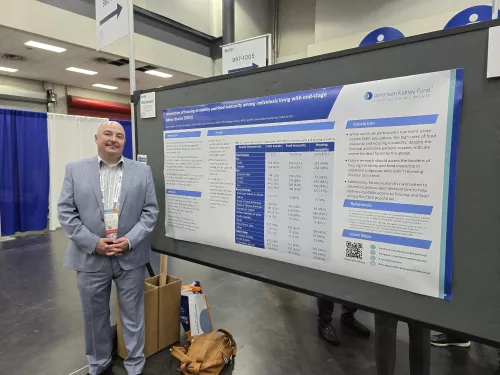
Intersection of housing instability and food insecurity among individuals living with end-stage kidney disease
Not having a stable home and lacking access to adequate, nutritious food (also known as food instability) can make it difficult to manage medical conditions and receive treatment, and it can substantially impact one's quality of life. While research has explored the individual impacts of housing instability and food insecurity on various chronic conditions, there isn't a lot of data on the burden experienced by people with end-stage kidney disease (ESKD), also known as kidney failure. Gaining a greater understanding of the impacts of housing instability and food insecurity on this population is critical for developing policies and interventions that address the unique needs of these individuals.
In December 2024, AKF sent an online survey to a random sample of 10,000 patients with ESKD who receive need-based charitable assistance from AKF to assess their housing instability and food insecurity. A total of 1,227 people completed the survey, which showed the following results:
- Forty-seven percent of respondents reported at least one housing-related issue.
- Sixty-one percent of respondents reported food insecurity.
- Overall, 62% of respondents who are food insecure are also experiencing at least one housing instability-related issue and 81% of respondents who are experiencing housing instability are food insecure.
AKF's research shows that — even with financial assistance — people with kidney failure on low incomes struggle with food insecurity and housing instability. Future research should assess the impact housing instability and food insecurity have on people who are not receiving financial assistance. Additionally, it would be helpful to conduct future research to determine policies and interventions that would help expand access to housing and reduce food insecurity among people with ESKD. View abstract.
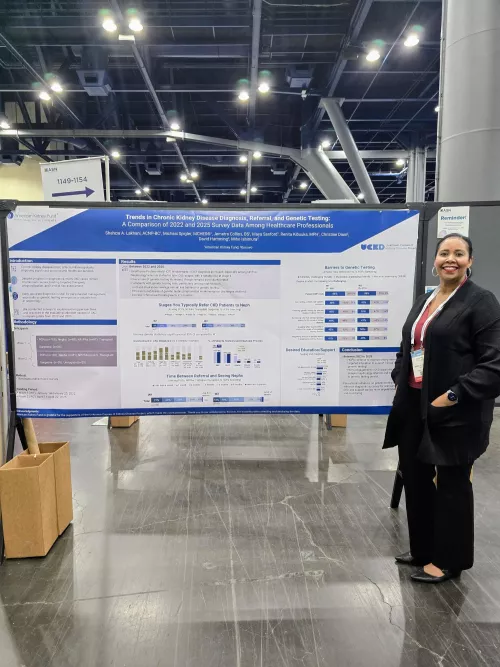
Trends in chronic kidney disease diagnosis, referral and genetic testing: A comparison of 2022 and 2025 survey data among health care professionals
Chronic kidney disease (CKD) affects 1 in 7 people in the U.S., causing significant burdens to those who live with it. An early and accurate diagnosis is crucial for proper, personalized management of someone's kidney disease, particularly for younger patients, people with family history and those who have atypical disease progression. Although progress has been made in diagnosing CKD, there are still many cases of CKD that have unknown causes.
As part of AKF's ongoing work with its Unknown Causes of Kidney Disease Project®, which seeks to improve understanding of how undiagnosed or misdiagnosed causes of kidney disease directly impact patient care and outcomes, AKF examined how perspectives and practices in the evaluation of unknown causes of kidney disease have evolved over the last few years. In 2022, AKF surveyed 300 health care professionals (HCPs) — primary care physicians, nurse practitioners/physician assistants (NP/PAs), nephrologists and transplant surgeons — on their diagnostic practices, referral patterns and familiarity with genetic testing for CKD. In 2025, 300 HCPs were once again surveyed, adding urologists to the types of professionals who were questioned.
Survey responses indicated that between 2022 and 2025, HCP involvement in CKD diagnosis increased, particularly among NP/PAs, but delays in referrals to nephrologists and ongoing barriers to genetic testing persist. Familiarity with genetic testing rose, especially among nephrologists, although overall use of the testing remains limited. Increased education on genetic testing could enhance the accuracy of diagnoses for unknown causes of kidney disease and support earlier, more targeted evaluation and monitoring. View abstract.
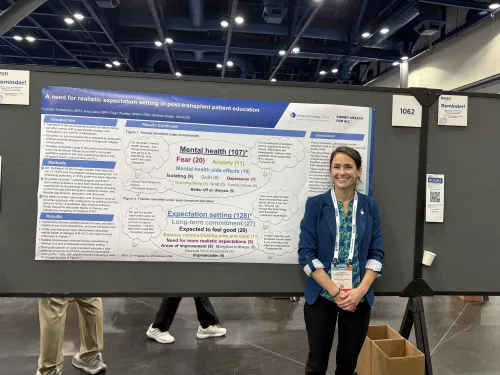
A need for realistic expectation setting in patient post-transplant education
Although getting a kidney transplant is considered the best treatment option for people living with kidney failure, receiving one can mean significant lifestyle changes, new medications and a risk for complications. Education on post-transplant life is vital to ensure transplant recipients and their caregivers are prepared not only for a change in lifestyle, but to help alleviate potential complications.
To identify gaps in education on post-transplant living, AKF conducted 16 hourlong in-depth interviews with patients, caregivers and transplant professionals. Topics included clinical care, lifestyle adjustments, education and resources. Interviewees discussed patient complications in detail, specifically mental health challenges. Many attributed these emotional responses to a lack of adequate expectation setting, indicating that they expected they/their patients would feel "good/normal" post-transplant. Common themes of fear and anxiety emerged during the interviews.
These insights highlight the need for patient education that clearly explains potential transplant complications and provides patients and caregivers with realistic expectations of post-transplant living. View abstract.

Related articles

Press release
Reception will celebrate leaders and advocates advancing kidney health, raise awareness of kidney disease and its impact on Black communities

Blog post
What people with kidney disease should know about artificial intelligence and their health

Blog post
Key takeaways for people living with chronic kidney disease from the recently published guideline on cardiovascular-kidney-metabolic (CKM) syndrome

Press release
AKF will host a Capitol Hill briefing today to examine the growing impact of chronic kidney disease (CKD) on the American workforce and the U.S. economy.