


Blog post
Kidney-related provisions in the 2026 government funding law
An overview of the kidney-related programs and funding levels in the Consolidated Appropriations Act of 2026
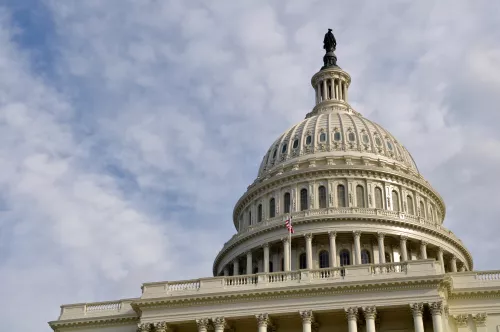
On February 3, 2026, President Trump signed into law H.R. 7148, the Consolidated Appropriations Act of 2026, which funds the federal government for the rest of the fiscal year (FY) of 2026 and ends on Sept. 30. The U.S. House of Representatives and the U.S. Senate negotiated the bill prior to releasing the legislative language. The bill had bipartisan support.
Congress did not pass an appropriations bill for 2025. Instead, it passed a "continuing resolution," which keeps funding levels and programs from the previous year. This means that the increases in the FY 2026 budget are compared to either FY 2024 or FY 2025, depending on the last year the amount was appropriated.
The federal funding legislation covers how much money a wide range of federal programs and activities will receive, including those that impact the kidney community.
Here is an overview of the kidney-related programs and funding levels in the Consolidated Appropriations Act of 2026.
Kidney disease research
In 2024, kidney disease was the eighth leading cause of death in the United States. Research is needed to understand the causes of specific kidney diseases, to create treatments and to find a cure. Federal kidney disease research is done through the National Institute of Diabetes and Digestive and Kidney Diseases (NIDDK).
H.R. 7148 funds the NIDDK at $2.33 billion for FY 2026, which is $20 million more than FY 2025. The amount for kidney disease research is not specified in the legislation. Instead, the amount of the $2.33 billion that is allotted to kidney research is decided by NIDDK leadership.
Public health CKD program
The Centers for Disease Control and Prevention (CDC) has a program called the "Chronic Disease Prevention and Health Promotion," which funds states public health programs focused on specific diseases, including kidney disease. The funding for the chronic kidney disease portion of the program did not change. It will remain funded at FY 2024 levels at $4.5 million.
National living donor assistance
The National Living Donor Assistance Center (NLDAC) is an organization overseen by federal agencies that run the Living Organ Donation Reimbursement Program (LODRP). The program allows living donors to apply for grants that cover transportation, lodging, lost wages, childcare and eldercare related to donating an organ. H.R. 7148 increases funding for this program by $1 million. The program is expected to have $7.5 million in FY 2026 to reimburse living donor expenses.
Additional legislation included in the bill
The Honor Our Living Donors Act: The bill includes the Honor Our Living Donors Act (passed by the House in 2024), which changes current law to make it easier for living organ donors to receive financial assistance from the Living Organ Donor Reimbursement Program. Currently, a donor is eligible for assistance if both the donor's and recipient's income are below the income limit. As a result, some low-income donors do not qualify for assistance because they donated to someone whose household income exceeds the income eligibility requirements. Under this provision of the bill, only the donor's income is considered, increasing the number of living organ donors eligible for financial assistance.
The Organ Procurement and Transplantation Network: This provision is a technical correction to the Securing the U.S. Organ Procurement and Transplantation Network Act, which was enacted in September of 2023. The new law changed the current system from having one contractor overseeing regional or state organ procurement organizations (OPOs) to allowing more than one contractor. The 2023 law did not change who had the authority to collect transplant waitlisting fees, which are needed to partially fund the system. Currently, the one contractor in the region or state is still the only entity legally allowed to collect registration fees. The new law would allow the Health Resources and Services Administration (HRSA) to collect registration fees, which would allow other vendors to apply to be OPOs.

Related articles

Press release
Reception will celebrate leaders and advocates advancing kidney health, raise awareness of kidney disease and its impact on Black communities

Blog post
What people with kidney disease should know about artificial intelligence and their health

Blog post
Key takeaways for people living with chronic kidney disease from the recently published guideline on cardiovascular-kidney-metabolic (CKM) syndrome

Press release
AKF will host a Capitol Hill briefing today to examine the growing impact of chronic kidney disease (CKD) on the American workforce and the U.S. economy.