


Blog post
'Being a shining light in my community' with AKF's help: A Q&A with KHC Nicole Bates about health equity and kidney disease education
KHC Nicole Bates shares how she is raising awareness of kidney disease in her community with help from the KHC Health Equity Grants program
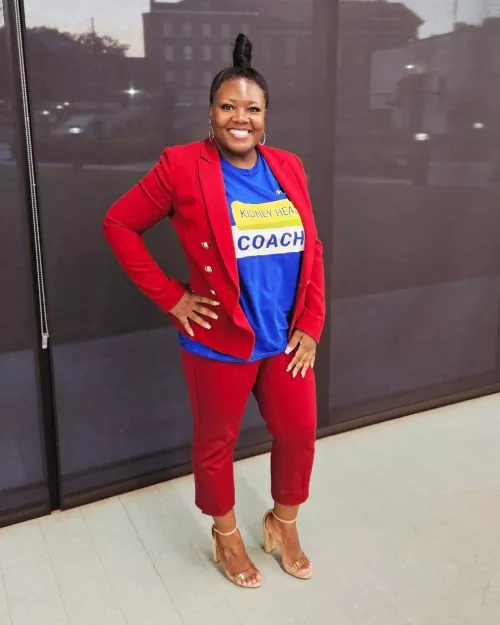
With fewer than 700 residents, Altheimer, Arkansas, could easily be overlooked. But for Nicole Bates, her hometown represents something far greater than a dot on a map. It represents a community of love navigating a significant burden of chronic disease — and an opportunity to lead transformative change.
Nicole Bates is a nurse practitioner with extensive experience in long-term care, dialysis, clinical nephrology, consulting and health care administration. She is also a certified nephrology nurse and has served as a state and contracted federal dialysis surveyor for the Centers for Medicare & Medicaid Services (CMS). Today, she extends her impact beyond clinical walls as an American Kidney Fund (AKF) Kidney Health Coach® (KHC) and a recipient of both individual and organizational AKF Health Equity Grants.
Her mission is simple but powerful: increase awareness, reduce disparities and equip communities with the knowledge to protect their kidney health.
We are spotlighting Nicole's story in this Q&A to recognize her leadership in her community, her passion for spreading awareness about kidney disease, and her efforts to address the health disparities she sees affecting her family, friends and neighbors.
Tell us a little bit about your background and why you decided to go into health care.
I entered health care with both personal conviction and professional clarity. Growing up in a small Arkansas community, I witnessed firsthand how uncontrolled hypertension [high blood pressure], diabetes and kidney disease impacted families, including my own. My father passed away from a subarachnoid hemorrhage after uncontrolled high blood pressure. My mother battled diabetes and kidney disease, ultimately losing her leg to complications before passing away.
Those experiences shaped me. I realized that while we cannot control every outcome, we can increase awareness and influence prevention. We can educate. We can intervene earlier. That realization shifted everything for me.
Health care became more than a profession — it became purpose-driven work rooted in equity, prevention and advocacy.
What made you want to become a Kidney Health Coach?
When I committed to nephrology, I did so with intention. I wanted to be fully prepared, clinically strong and a true asset to the community I serve. Clinical excellence matters to me — but so does impact beyond the office.
As a nephrology nurse practitioner, you primarily care for individuals with kidney disease. That work is critical. However, I began to ask myself a larger question: How do I intervene before patients reach the nephrology office?
Becoming a Kidney Health Coach allowed me to shift from managing disease to actively preventing it. The Kidney Health Coach program is absolutely amazing because when you're working as a nurse or a tech [in the clinical space], you don't get that really detailed education. It expanded my role from treating complications to equipping communities with knowledge, tools and strategies that protect kidney health early.
That transition elevated my work from transactional care to transformational outreach. It aligned my clinical expertise with my passion for health equity, prevention and community empowerment. I thought that was a special thing, and it is still special to this day because it has allowed me to do a lot more than just work for a paycheck.
Last year, you received a Kidney Health Coach Health Equity Grant for an organizational project with the Pine Bluff (AR) Chapter of The Links, Incorporated, a nonprofit volunteer organization that focuses on civic, educational and cultural engagement. Could you please describe how your organization used funding from the grant?
Through AKF funding, 20 of our 24 Pine Bluff chapter members became Kidney Health Coaches. That created a multiplier effect. Now, when we participate in health fairs, expos and community events, we show up not just as volunteers — but as trained kidney health coaches.
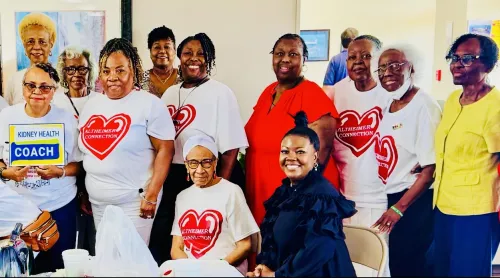
Pine Bluff has a population of approximately 37,000 residents, with nearly 70% identifying as African American. Chronic disease rates — including diabetes, obesity, hypertension and kidney disease — are disproportionately high. Health literacy gaps are also significant.
The grant enabled us to:
- Print and distribute kidney education materials
- Host community forums with local nephrologists
- Attend and host multiple outreach events across our community
What stood out most was the community response. Many people did not know their kidney function numbers. Many had never heard of eGFR [estimated glomerular filtration rate]. People had so many questions that our sessions often ran longer than planned. That showed us there was a real need for clear kidney health information in the community. The Health Equity Grant gave us the support and resources to meet that need in an organized, meaningful and ongoing way.
This year, you received an individual health equity grant. What project are you working on with this grant?
This year, the grant has allowed me to expand my outreach across multiple community platforms.
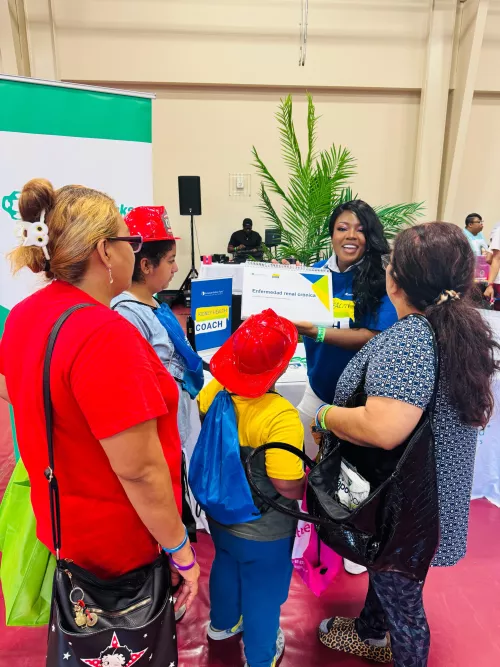
I attended Old Saint James' 2nd Annual Health Fair, where I talked with community members about the importance of knowing their kidney numbers. It was a great opportunity to answer questions, raise awareness and encourage early detection and prevention.
I served as a keynote speaker for the Color Purple, Inc. Lupus Support Group, where we focused on the connection between lupus and kidney health. That conversation was critical because many individuals living with lupus are at increased risk for kidney complications.
I also presented to the Altheimer Connection Group — a respected circle of former educators and long-standing community leaders who helped shape our families and school systems for generations. There is something deeply meaningful about returning home to educate those who poured into you. I delivered a presentation on chronic kidney disease that was well attended, interactive and thoughtfully received.
In February, during Heart Health Month, I am hosting a heart-healthy, kidney-friendly cooking demonstration at the Pine Bluff Library. Using AKF's Kidney Kitchen® resources, I selected quick, budget-conscious recipes that support both heart and kidney health. I am showing families how small, sustainable changes in the kitchen can influence long-term outcomes. American Kidney Fund even has little recipe cards — AKF has everything I need to be a shining light in my community.
In March, in recognition of National Kidney Month, I am hosting a community discussion in Altheimer titled, "Let's Talk Kidney Health." The objective is straightforward: increase awareness, promote early detection and equip my community with the knowledge needed to prevent kidney disease.
Why is spreading kidney disease awareness especially critical in at-risk communities?
The data is clear: African Americans are three to four times more likely to develop kidney failure compared to their white counterparts. When you layer in social determinants of health — limited access to nutritious foods, lower income levels, lower health literacy, transportation barriers and reduced access to preventive care, you begin to understand the drivers behind those numbers.
Uncontrolled diabetes remains the leading cause of kidney failure. And diabetes prevalence remains high in underserved African American communities.
In Pine Bluff, the majority of residents are African American. Awareness is not optional — it is urgent. If someone has chronic kidney disease, our goal is slowing progression. If they do not have it, our goal is prevention.
Visibility matters. During Heart Health Month, you see "Go Red" campaigns. During Breast Cancer Awareness Month, pink is everywhere. March is National Kidney Month, and visibility is limited. So, we fill the gap. We show up. We educate. We advocate.
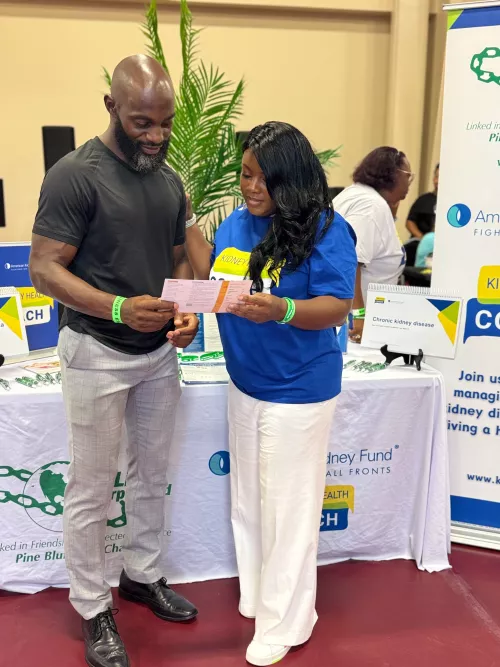
What advice would you offer others who want to educate their communities about kidney disease?
Start with understanding your community. Education must be delivered with patience and clarity. Avoid complex medical terminology. Translate information into simple, practical language. Meet people where they are — geographically, culturally and educationally.
Prepare for questions. Be knowledgeable, and when you don't know an answer, commit to finding one. Trust is built through transparency.
Most importantly, jump in. Once you see the impact — once you witness someone understand their lab results for the first time or commit to lifestyle changes — you develop a passion that sustains the work.
Community education is not a side project. It is frontline prevention.
For Nicole Bates, serving as a Kidney Health Coach is more than professional development. It is legacy work.
Through strategic partnerships, evidence-based education and a steadfast commitment to health equity, she continues to be what her community needs most — a consistent, informed and compassionate advocate for kidney health.

Related articles

Blog post
A closer look at new treatments, clinical trials and technology in kidney care

Press release
AKF has activated its Disaster Relief Program to assist dialysis and post-transplant patients affected by the wildfires in Washington state.

Press release
New resources include interactive online course providing step-by-step support before and after a kidney transplant

Press release
Symposium will highlight AKF's work to advance kidney health equity through its Kidney Health for All® initiative