Blog post
People living with FSGS share what a treatment would mean for them
AKF Ambassadors and RKDAN members who are living with FSGS share their stories and what a treatment would mean to them.
The Food and Drug Administration (FDA) is currently reviewing the use of a new drug called sparsentan (FILSPARI) for treatment of a rare kidney disease called focal segmental glomerulosclerosis (FSGS). If approved, it would be the first-ever treatment for FSGS. Meanwhile, there are additional clinical trials studying FSGS.
FSGS is a rare type of glomerular disease that causes scarring (sclerosis) in your kidneys. Scarring in FSGS occurs on the tiny filters in your kidneys (glomeruli) that help remove toxins from your blood, and the damage from the scarring can lead to kidney disease or even kidney failure.
Members of our AKF Ambassadors and Rare Kidney Disease Action Network (RKDAN) who are living with FSGS shared their stories of living with the disease with us, and what a treatment would mean to them.
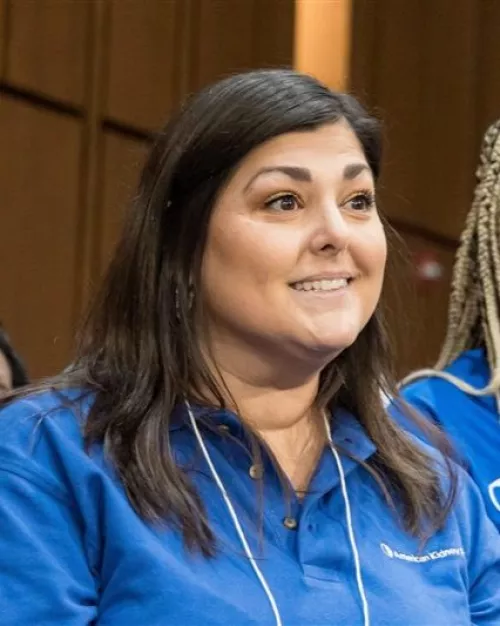
Kimberly Queen, Douglassville, GA
"With my first kidney transplant, FSGS returned within 24 hours," said Kimberly Queen. "From that point forward, my care consisted of trying medication after medication, many not designed for FSGS, hoping something might slow the disease. I was often told, 'This has worked for others,' or 'Let's try this and see what happens.' There was no clear pathway, no proven standard, just trial and error. I frequently felt like a guinea pig, enduring treatments with uncertain benefit while hoping for even the smallest improvement.
"That process was physically exhausting, but it was also emotionally devastating. Every new treatment carried hope, followed by disappointment when it failed. Despite everything we tried, that transplanted kidney lasted only six and a half years.
"Now, with my second kidney transplant, I live with constant fear. Every lab result brings anxiety, wondering if FSGS has returned and if I will once again face the same exhausting cycle of experimental treatments, hoping for a slight reduction in protein loss. The uncertainty never truly leaves.
"An FDA-approved medication for FSGS would change everything. It would mean guidance instead of guesswork. It would mean evidence-based treatment rather than trial and error. It would give patients and providers a clear starting point and a sense of direction, instead of relying on hope alone.
"For people living with FSGS, FDA approval represents more than a new drug. It represents validation, stability, and the possibility of facing this disease with confidence rather than fear. It would spare future patients from feeling like experiments and instead allow them to feel like recipients of purposeful, informed care."

Sharron Rouse, Fort Washington, MD
Sharron was diagnosed with FSGS in 2006, and in 2024, she found out her FSGS was a result of APOL1-mediated kidney disease (AMKD). AMKD is a spectrum of kidney diseases associated with variants (mutations) in the apolipoprotein L1 (APOL1) gene. Everyone has two copies of the APOL1 gene, but people with two mutations are at higher risk of developing genetic forms of kidney disease, including FSGS. They are also more likely to have a more rapidly progressing form of kidney disease, meaning their disease progresses to kidney failure faster.
Sharron was on both hemodialysis and peritoneal dialysis before she received a transplant from a living donor (her sister) in 2006. "An FSGS FDA approved treatment means the power to stop the 'silent' scarring of FSGS before it shatters a life," said Sharron. "After being blindsided by kidney failure at the age of 31 and enduring dialysis, I know that patients need more than just a bridge to survival — we need a way to protect our native kidneys. This targeted treatment would shift the narrative from inevitable decline to sustained health, empowering citizens to stay in the driver's seat of their lives."
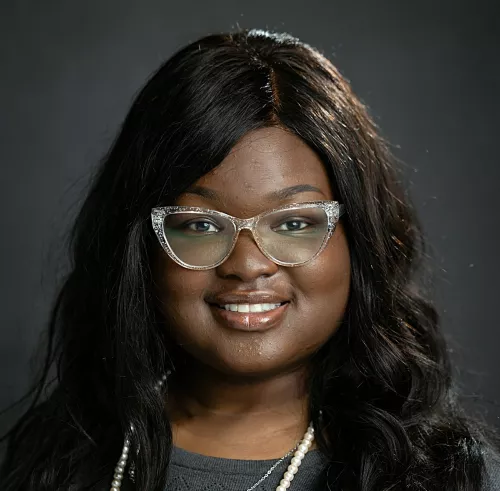
Leigh-Ann Williams, Marrero, LA
Leigh-Ann was diagnosed with acute renal failure and FSGS in September 2012. After receiving a few dialysis treatments in the hospital, the acute kidney failure resolved and she was able to stop treatments while being monitored for the next three and a half years. When she was one month away from graduating college in 2016, Leigh-Ann found herself in the emergency room, "crashing" into dialysis. She has been on dialysis ever since.
Dialysis has not slowed Leigh-Ann down, though. She has earned two masters degrees, served on the executive board of several community and civic organizations, traveled internationally, and currently serves as chapter president of her sorority's local chapter that has nearly 100 members. All while working full time, making time to advocate and volunteer in her community, and maintaining her home dialysis treatments.
"I am urging the FDA to approve new treatments for FSGS because even though kidney disease as a whole doesn't get enough attention, rare diseases like FSGS are hidden even more," said Leigh-Ann. "My FSGS diagnosis was in 2012 and with it being a rare disease, there was not much research or information available. It already limited what medical professionals could tell you about the disease. And not having any viable treatment options worsens the experience even more. One, you have the disease. And two, there's nothing we can even do for you. So please do what you can to bring new treatments for FSGS out into the kidney community."
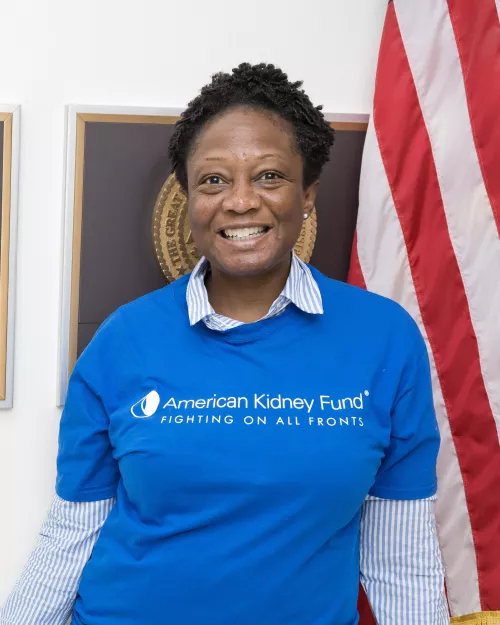
Kristal Higgins, Olive Branch, MS
Kristal Higgins family has a long history of kidney disease, but Kristal was not diagnosed with FSGS until 2010. A month after her diagnosis, she began dialysis treatments. Fortunately, she received a kidney transplant and stayed off dialysis for five years before the FSGS recurred. She ended up back on dialysis until she received a second transplant in 2025.
For Kristal, a new treatment would mean more options for people living with FSGS.
"The discovery of an FSGS FDA-approved treatment would offer an alternative for managing this disease," said Kristal. "A new therapy would provide an option for FSGS patients in addition to dialysis and kidney transplant. I currently have a functioning kidney transplant, and I understand that FSGS could present in my new kidney at any moment. This breakthrough gives me hope that strides are being made in medicine toward a cure for FSGS and someday the end to all kidney disease."
You can find out more about FSGS on AKF's website and you can search for an FSGS clinical trial on AKF's clinical trial finder page If you would like to advocate for the rare kidney disease community, consider becoming an AKF Ambassador or a member of RKDAN.

Related articles

Press release
Symposium will highlight AKF's work to advance kidney health equity through its Kidney Health for All® initiative

Press release
Together they are advocating for legislation to protect living organ donors and access to healthcare

Blog post
AKF Ambassador shares what it was like providing testimony for an important congressional meeting on kidney disease in the U.S.