


The Kidney Collective: I Wish I Knew About Transitioning to Home Dialysis
A conversation with Leigh-Ann Williams, as part of The Kidney Collective's introductory podcast series.
Oct. 29, 2025 | The Kidney Collective
In this episode of The Kidney Collective, Tamara and Mike talk with Leigh-Ann Williams about her dialysis journey — from in-center to home dialysis. They discuss the benefits of home dialysis, including the more flexible schedule, the shorter treatment times and the reduced fluid restrictions compared to in-center dialysis. Leigh-Ann also describes some of the challenges of home dialysis, from space for supplies to learning to navigate the many alarms, but encourages others considering it to not be intimidated. The three dive into how Leigh-Ann crashed into dialysis but eventually came to understand her diagnosis of focal segmental glomerulosclerosis (FSGS), lupus and APOL-1-mediated kidney disease (AMKD). Despite her kidneys failing at such a young age, Leigh-Ann has not allowed dialysis to slow her down! She has earned two masters degrees and traveled as far as Hawaii and the Bahamas and hopes to fulfill her goal of going on a cruise soon — all while receiving dialysis treatments.
About Our Guest
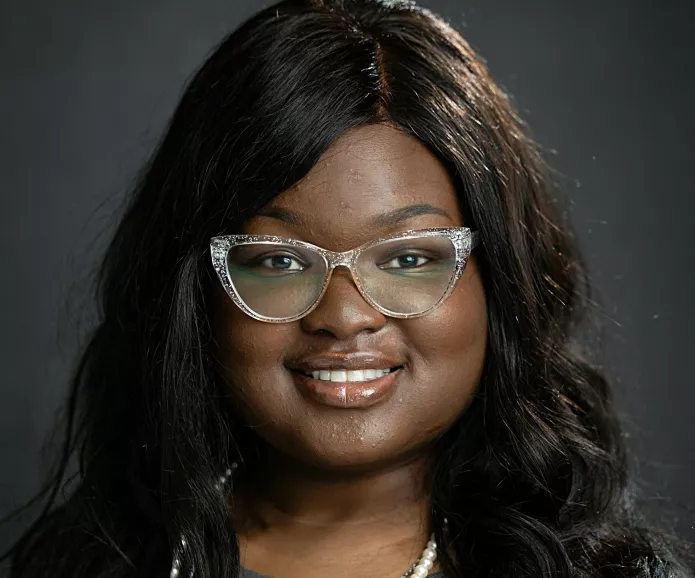
Leigh-Ann Williams
Leigh-Ann Williams is an AKF Ambassador and Kidney Health Coach from New Orleans who lives with kidney failure and is on home dialysis. She is an active advocate for the kidney community and was honored for her great work as the 2021 AKF Hero of Hope.
Show Notes
- Living with kidney disease doesn't mean giving up on life goals. Leigh-Ann earned two master's degrees while on dialysis.
- Chronic kidney disease often presents subtle symptoms. Understanding your body is key to managing kidney health.
- Fluid restrictions can be a significant challenge for dialysis patients.
- Home dialysis requires training and confidence, but offers more flexibility and freedom.
- Advocacy is crucial for improving the lives of kidney patients, and support from family and care partners is invaluable.
- Education about kidney disease is essential for patients, families and loved ones.
- More resources:
Chapters
- 00:00: Introduction to The Kidney Collective
- 01:36: One Thing Leigh-Ann Didn't Know She Could Do on Dialysis
- 03:20: Leigh-Ann's Journey with Kidney Disease
- 04:41: Understanding Acute Kidney Injury
- 06:05: Leigh-Ann's Chronic Kidney Disease Symptoms
- 09:04: Transitioning from In-Center to Home Dialysis
- 11:49: The Dialysis Recovery Process and Daily Life
- 13:35: Diet and Fluid Restrictions for In-Center vs. Home Dialysis
- 16:41: Getting Comfortable with Home Dialysis and Learning About Your Body
- 20:34: Leigh-Ann's Experience with Learning the Cause of Her Kidney Disease
- 23:59: Home Dialysis Challenges, Barriers and Advice
- 27:48: Advocacy and Inspiring Change
- 31:10: Recap of Leigh-Ann's Conversation
Transcript
Leigh-Ann Williams: Hi, I'm Leigh-Ann Williams and I've been on dialysis for nine years. But one thing I wish I knew, and other patients knew, was about the home dialysis option when we found out that we had kidney failure.
Tamara Ruggiero: Hello, I'm Tamara Ruggiero.
Mike Spigler: And I'm Mike Spigler.
Tamara Ruggiero: And welcome to The Kidney Collective, a podcast series that gives voice to what it's really like to live with kidney disease. In each episode of this limited series, we'll talk to a member of the kidney community about their experience, including what they wish they had known before their journey began.
Mike Spigler: Join us for a personal look at what life is like in The Kidney Collective and come away with information and inspiration to help you know how to take charge of your kidney health.
Tamara Ruggiero: Our guest today is Leigh-Ann Williams. Leigh-Ann Williams is an AKF Ambassador from New Orleans who lives with kidney failure and is on home dialysis. She's an active advocate for the kidney community as an ambassador and a kidney health coach. And she was honored for her great work with AKF as the 2021 Hero of Hope. Leigh-Ann was diagnosed with a rare kidney disease called FSGS in 2012, and she suffered acute kidney failure in 2016, which is when she began her dialysis journey.
She spent 16 months doing in-center dialysis before transitioning to home dialysis. But she has not allowed dialysis to slow her down, and she's a shining example of voicing her personal mantra, "these kidneys won't hold me back". Welcome, Leigh-Ann.
Leigh-Ann Williams: Thank you, happy to be here.
Tamara Ruggiero: So Leigh-Ann, what is something you've done while on dialysis that people wouldn't believe you could do?
Leigh-Ann Williams: So, there are so many things. First, and I think the one that I'm absolutely most proud of, is the opportunity to earn two master's degrees. So, you know, when I started dialysis, I was one month before I finished my undergraduate program. And you could imagine that that was definitely a change. It changed everything for me. But that fall, I started an online master's program. By the time I completed that program, I had transitioned to home dialysis. And so I was able to go back brick and mortar to an on-campus university and obtain my second master's in public health with a concentration in epidemiology. So, while being on dialysis, being able to earn two advanced degrees, but also I think just the sheer amount of traveling. You mentioned the 16 months of dialysis that I did in center. To note was during that 16-month period, I actually did dialysis at 19 different dialysis clinics.
And that was due to me being an international officer in my sorority. I was the third vice president of my sorority and it required extensive travel. I think somewhere that year I had 26 flights. So 26 weekends out of the year, I was traveling. And so 19 different dialysis clinics, when there's some dialysis patients that will never go to a dialysis, that'll do a dialysis treatment anywhere besides their home clinic.
Mike Spigler: That is really impressive. I mean, that's one of the benefits of home dialysis, it's more freedom. But to do that in center is really impressive. I'm sure it took a lot of coordination to do. Go back in time to when that first happened. You know, when you were first diagnosed, what did you know about kidneys overall? Like, what was it like getting that diagnosis and hearing that from the doctor that you needed to start dialysis?
Leigh-Ann Williams: So, you know, my journey really started in 2012 and I had this instance of acute kidney failure when I was still really young in college. And I mean, the first time I had no understanding, you know, I remember, you know, telling the doctors, you know, well, my kidneys, I'm urinating, so my kidneys are working just fine. I don't know what you mean by, you know, acute kidney failure. So just the shock of it all that, you know, someone at my age could be experiencing kidney failure and then having to start dialysis. And I did do a few treatments and my kidneys started to work again. So in 2016, when I started dialysis again, this time when they had truly failed, I at least had had that experience in 2012. So I knew what dialysis was. I knew kind of what to expect with the treatments. So it wasn't completely brand new for me. It just was the realization this was going to be long time this time. It wasn't going to just be four treatments. the kidneys were going to kick back and I would get my life back. So I think that was the biggest change for me.
Mike Spigler: Yeah, you know, and I think it's important what you just said, because I think it's good for the audience to know about acute kidney injury, acute kind of dialysis. And for those of you may be hearing that for the first time, that can happen for a lot of different reasons, like infections, toxins. It happened very often during actually the COVID pandemic that lots of people needed dialysis because of just the infection that happened. A lot of times you can bounce back from that and recover your kidney function a little bit temporarily, but a lot of times there's damage that's done in that process. And I think it's important for people to know that even when you have, you hear the doctor say AKI or acute kidney injury, it's definitely something to look out for. And, you know, I think you're a good example of that.
Tamara Ruggiero: What were the symptoms you experienced, Leigh-Ann, when you first went to the doctor for this?
Leigh-Ann Williams: So, in 2012 or in 2016 when I got the chronic kidney disease diagnosis?
Tamara Ruggiero: I would say 2012.
Leigh-Ann Williams: So in 2012, it was the infection. So to Mike's point, I had an infection on my side. I had went to the on-campus infirmary and they said, you we think you should go to the ER and get that cleaned out and then come back to us and we'll be able to help you better. So I just went for what I thought was an infection on my side, a little abscess and, you know, through the testing, blood work and everything was how they came back and said, "Um, you're experiencing kidney failure."
Tamara Ruggiero: Mm-hmm. And then in 2016 is when you experienced, so then take us through 2016 like what were the symptoms that you had at that time?
Leigh-Ann Williams: Yep, being a kidney patient advocate I'm always you know telling people about chronic kidney disease being the silent killer because in two years, when you look back you can relate so many symptoms. But one of the things that I'll say was fatigue. I was tired but also I was one month before I was about to graduate, so I also wasn't sleeping. So you just related all of the symptoms to other things. I had a headache. I remember I was again traveling because I was campaigning for that position I ultimately won. And I remember giving a speech and I had been in my sorority a few years now and some of my sorority members were like, Leigh-Ann, you just aren't yourself. And I didn't feel myself. I couldn't really pinpoint. I wasn't sick like with the cold, my stomach wasn't necessarily hurting, I just didn't feel well. And so that for me, I had an instance of getting sick, physically ill for no reason. And to me that was alarming. And so having someone say, "you know, you just aren't yourself' and then to be getting physically unwell for no reason, I didn't eat anything bad or something like that. When I came back from that trip, I told my mom, said, you know, I was in Kentucky and I said, "mom, I think I'm gonna go to the ER when I get back to Monroe", which is where I did my undergrad program. And sure enough, we left Kentucky, I went, got back to campus, went straight to the ER and my mom was actually supposed to be going back to New Orleans and it's like divine that she didn't go back. She drove to Monroe. Just, you know, word and concern. And that was when we actually, you know, got the diagnosis that the kidneys had, completely failed and I would need to start dialysis immediately - right there in the ER.
Tamara Ruggiero: I think what you said is so important about the subtlety of the symptoms. And it's so interesting that members of your sorority picked up on it and said, you just don't seem like yourself.
Leigh-Ann Williams: Yeah, I was still going to class. I had traveled, I think we had driven to Kentucky and we drove to Kentucky. So I was okay, but just not myself. And I still remember that comment to this day, her telling me, you know, "you just don't seem like yourself". And that really was what did it for me in terms of saying, maybe I really do need to, when I get back, see what's going on because I haven't been feeling well. I have been being sick and you know, there's no reason for it.
Mike Spigler: Leigh-Ann, thinking about when you first went into the in-center the first time, so many people, first off, a lot of people, had exactly what happened to you. You kind of crash into dialysis with not a lot of warning. Sometimes when you have a slower decline, I've talked to lots of patients when there's been time, you know, your home dialysis options are considered. But for a lot of patients, it's hard to get out of in-center and get onto home. So, how did you become aware of home dialysis? How did that conversation happen? You're such an inspiring story, but this is just another example of it. How did you get to home dialysis for being an in-center?
Leigh-Ann Williams: Yeah, so actually, back in 2012, when I first was diagnosed with acute, because of my insurance, even though I was in college, I actually had to get brought home via ambulance. It about four-and-a-half-hour ride. because my insurance was still under my mom and their hospital wouldn't pay for me to have any type of care. So I came home and my nephrologist that was here, she mentioned home dialysis, but she told me it would be like eight hours a night. And you know, at this, I was, I think I was maybe a sophomore in college. And so I was like, ma'am, I'm not sleeping eight hours a night. There's no way that I can do dialysis for eight hours a day. And so it kind of just, you know, brushed it off. put it to the back. And so in 2016, of course I crashed. And so of course I ended up in-center, no other options. And in-center, they had advocates that would come to our center and talk about home dialysis. And so for me, of course I had been doing a lot of traveling anyway. So I was definitely interested in hearing more about it because being in-center definitely had me on such a strict schedule of days. I had dialysis and then my other days were pretty much recovery days of getting back because I did late shift dialysis. So got off dialysis about 6:30, 7:00. So my days were done after that. And then I would spend the next day recovering or doing whatever I needed to do. And so they just came out. And for me, one of the things that I had wanted to do before I, as a graduation gift, was to go on a cruise. And so I asked the advocates that came out. Would I be able to go on a cruise if I do home dialysis? And they go, "Absolutely". So I was like, okay, know, whatever I need to learn, whatever I need to do, sign me up. You know, they talked about, you know, lesser fluid restrictions, which, you know, was a plus for me. Shorter treatment times, which is a plus for me because I was doing dialysis and it was a pretty significant amount of time. But my neighbor, Mr. Wayne, Mr. Wayne was doing six and a half hours. He was spending every three days a week of shift with the staff and so having the opportunity to go home and to do shorter dialysis treatments, more frequent dialysis treatments, but just having that ability to travel more freely was really what piqued my interest in home dialysis.
Tamara Ruggiero: Yeah, that makes a lot of sense. I wanted to ask you a little bit, before we talk more about home dialysis, I think what you talked about with regard to the recovery days is so important for people to understand. My dad was on dialysis in-center and I had, this was when I was a kid, but I have his journals from that time. And he writes a lot about how on his days not on dialysis, when he's recovering, how terrible he felt on so many days and how just wrecked he was. Can you talk a little bit about that? Because that's something we're trying to make the public more aware of that dialysis is not just, you go through times a week to the in-center and then you're fine on the other days. It's really a continuous process of treatment and recovery.
Leigh-Ann Williams: Yes. It was, you know, just like I said, so my dialysis time was about 1:00, 1:15. So there was only so much I could do on those days because I had to be at dialysis at 1:00. And then my treatments ended, by the time we finished everything, it was about 6:30 PM. And I was completely washed out, completely tired. I would go home, most of those days I didn't eat dinner. I just was so tired. I just wanted to go to bed. And so I would lay down at 6:30 PM. 7:00 I'm asleep until the next day. And so that next day was spent just kind of getting back to myself, kind of just trying to feel normal, relaxing as much as possible, blood pressure kind of elevating back, coming back to normal levels and just feeling like myself. So usually around, you know, so I was Monday, Wednesday, Friday. So, on Tuesday, Thursday, Saturday, around midday or so afternoon, I'm finally back feeling like myself. But then now you're basically in prep mode for Wednesday's dialysis.
Mike Spigler: So obviously just how you felt, right, as it was worse in in-center, that kind of the structured kind of flexibility and the structured timing, the ability to travel. But what other benefits? I mean, I know for one thing, you live in what I think is probably the best food city in the world, in New Orleans, right? So, I mean, what about diet, fluid restrictions? Like, how did that change with going to home dialysis?
Leigh-Ann Williams: Yep, so fluid restrictions was definitely one of those other things that they talked about that was a plus for me for going home. That 32 ounces, people don't realize it. That's one of the things that I always like to share with people when I talk about some of the struggles for dialysis patients. I like to share, you know, four eight-ounce cups of water is all we can have all day. And you don't realize how much you consume or how much you drink, even if it is just water, until you have that restriction. And so for me, that was one of my hardest things I had to deal with because you're doing dialysis, you're drying your body out, you have this thirst and you're so restricted on the amount of fluids you can drink because it has adverse effects. I mean, you can drink and there's nobody stopping you, knocking the drink out of your hand, but it has adverse effects. And not even just, people don't realize this, but I like to share this as well. It's any liquid. Soup, you can't have soup at a meal. If you have soup at a meal, you really are limiting your fluids. Sauces on soups and salads and everything. Anything that's a liquid at room temperatures, what they tell you is considered a fluid. And so you don't realize as well how many things, especially here in New Orleans, they love a gravy. And so it's like, you know, they want to put a gravy or a sauce with everything, but all of those things are considered fluids and contribute to that 32 ounces that you're supposed to have a day. And so you don't want to go into overload because then that makes your dialysis treatment even rougher trying to remove that fluid. If it is something with a lot of sodium in it, now it's messing with your blood pressure. So now, you know, you've exceed the amount of fluid you're supposed to have and now you have a challenging dialysis treatment. So now you know you're feeling bad for more days. So, you know it all works together.
Tamara Ruggiero: Yeah, I think the thirst issue is such a huge issue that people not on dialysis or who don't have someone they love on dialysis just can't understand. My dad used to refer to it as the big T, the big thirst and you know, like my drink my cup that I have here full of iced coffee right now is 32 ounces, right? That's all you can have in a day. So contrast that with now being on home dialysis.
Leigh-Ann Williams: So on home dialysis, because I do more frequent treatments, so for me, I do four treatments a week. Originally, I was doing five treatments a week. Some people do still do six or seven days. You're able to have a little less fluid restriction. So still not able to just consume, you know, constantly or as much as you would like. But able to loosen those restrictions because you are doing more treatments. So you are able to take off fluid on a more regular basis than just those three times a week.
Mike Spigler: If someone's listening to this right now, Leigh-Ann, and they're like, okay, well, I get all of that, but I can't envision doing this at home. I can't envision giving myself, sticking myself with a needle or putting a peritoneal dialysis catheter in and dealing with that. What advice do you have for them for kind of overcoming that?
Leigh-Ann Williams: I would think to believe that they really can do it. I did not see this for myself. I was interested, but I was always interested when I was in dialysis and knowing my numbers and what I needed for this and that. You would not have made me believe, even when I thought about going home, that one of the things for me would be having to stick myself. But I really love it because I get the opportunity to fully care for myself, but also, you get to learn your body even more. So one of the things about being on dialysis, and I remember when I first started and you know, people tell you about getting sick and it's something that every dialysis patient is going to experience. You know, unfortunately your blood pressure is going to drop or you may get physically sick and being on dialysis now for nine years, especially being at home, you recognize those symptoms earlier and earlier. And so it's a learning process and so going home for dialysis they don't just send you home. It's a training process and you know if you aren't ready you know it's a set amount of time, but if you tell them you aren't ready they'll work with you until you feel comfortable. But I think it still is that leap because you see these professionals at the center and they have all of these years of experience and knowledge but you learn. And like I like say nobody knows you better than you ultimately. You know what's best for you and they're going to teach you what you need to know to handle the machine. So just trusting yourself that you know what's best for you would be my advice to someone that's nervous. Like you can, you can do it. The teams work with you, you know, from whatever level you are. My grandmother's my care partner and she likes to me she's terrified of blood, but she draws my laughs. You know, she, she does my treatment. You know, when you don't have an option, we've always made do. And you, we do it every day. We make do with what we have and you can do it, you know, it may be nerve wracking. You may be uncertain, but you get comfortable. I'm eight years into home and we still have issues. Sometimes things happen. I'm like, this is the first time that's happened. So, you know, it's inevitable, but those same things happen can happen in a dialysis center as well.
Mike Spigler: Yeah. And, know, for some of those challenges you talked about, AKF has a Dialysis at Home online event that we do every Fall. And we have an archive of sessions of those on our YouTube channel that's coming up again this Fall. But a lot of the things you talked about, how to overcome and really kind of even showing what some of those practices look like are on those. I would suggest that anyone listening to this, maybe check that out if you're considering home dialysis.
Tamara Ruggiero: Leigh-Ann, who was the first person who talked to you about home dialysis and when did that happen?
Leigh-Ann Williams: So the very first time, it was as I mentioned, my nephrologist back in 2012, Dr. Kim, she mentioned home dialysis and then it wasn't mentioned again until I was on dialysis in 2016. And it was those advocates that came out to the dialysis center to encourage patients to consider home dialysis.
Tamara Ruggiero: So was fairly soon after you started dialysis that you learned to novel or?
Leigh-Ann Williams: Well, not fairly soon because I did in-center for 16 months. I mean, as soon as they came, I made the transition. So it was about a year because I started dialysis when I still was away at college. So I had to come home and do that transition of moving home, doing the dialysis at home and then, so about a year after I had been on dialysis, they came out.
Mike Spigler: Leigh-Ann, a lot of people that are kind of in your situation and crashed in rather suddenly into dialysis, very infrequently does their health care team actually work with them to figure out what caused their kidney disease. You know, obviously the acute kidney failure that you experienced was from the infection. I'm sure that played a role, but there's something underlying there. I mean, you know, has anyone talked to you about the cause of it? What have you done to kind of figure that out for yourself as well?
Leigh-Ann Williams: Yeah, so it was FSGS and I remember back in 2012, my nephrologist who, she truly was awesome, she actually was the person who suspected that I also had lupus. I wasn't actually officially diagnosed with lupus until 2014, but as my nephrologist in 2012, she had started ensuring I had medications to treat my lupus symptoms. And she was the one that actually diagnosed me with FSGS. And at that time, she told me it was very rare. And she had reached out to colleagues as far as New York, just trying to find information because she didn't have any information to give me. I remember, you know, I'll share this, being told by, you know, another clinician once it was FSGS that, you know, it would be easier to treat if I had HIV. And so, you know, 20 years old being told it would be easier to treat this kidney disease I had if I had HIV. And I'm just trying to, you know, learn, figure out and adjust. And so for a long time, I just said, okay, I have FSGS. I didn't know what caused it. And that just, you know, I just, it was new, it was rare, knew I had it, knew that it was what ultimately progressed me to kidney failure. And then two years ago, yeah, about two years ago, I got a ping in my email about some genetic testing that I had done back in 2019 for the lupus because in that time, they just were looking for genetic markers or anything they could do for research to kind of find what is causing lupus in certain people and found out that I had both variants of the APOL1 gene mutation. And so for me, that answers so many questions because for years, Mike knows I participated in Unknown Causes of Kidney Disease because I had no idea what caused mine. I have a family history. But everybody in my family that had kidney failure all were diabetics, they had diabetes, and they ended up in kidney failure as a result of complications of diabetes. There was nobody in my family with a history of kidney failure prior to or instead of diabetes complications or who didn't have diabetes.
Mike Spigler: Yeah, and we're learning more and more of it. You know, sometimes it's yes, AND. Right? Diabetes AND something else that's there. And we're seeing that more and more. And you're a good example that, you're dealing with lupus, FSGS, and then the APOL1 variance. And if you're hearing that that term for the first time, if you're not aware of that, I would encourage you to go to the show notes and you can learn more about APOL1-mediated kidney disease. It is a rare genetic variance that cause...Basically the best way to describe it is most people with kidney disease are kind of like in a steam engine and for people that have the APOL-1 variance go through them, for some people, it's like a bullet train into kidney failure. So just the progression is much faster.
Tamara Ruggiero: Leigh-Ann, if we could go back and just talk for a minute because we're trying to give people sort of a full picture of what home dialysis is like. So we've talked a lot about the benefits. What are some of the challenges that you've experienced either maybe when you initiated home dialysis or just like ongoing challenges that you might have with it?
Leigh-Ann Williams: I think some of the challenges, one challenge for sure is like I said, just you're not a medical professional, right? So when you do get those inevitable alarms, just knowing what to do, you have your book and heavy material, but just kind of navigating that, can be nerve wracking. Y'all are experiencing some type of episode of your blood pressure dropping. The same things that can happen in surgery, just the nerves of being at home and that happening I think is one of the challenges. But also one of the biggest challenges that many people face, and I'm blessed that it isn't my struggle, it's just, it's a lot of supplies and a lot of space. So I'm blessed that I have a dialysis room. I have a room that has its own closet, so it has my medical supplies, just my machine, my TV, so it's completely disconnected from everything in the house. Some patients have to have it in their bedrooms and so it's like that constant reminder of being on dialysis even when you're in your bedroom. Or some people have to have it in their living room and so you have company over and you have the limit who can come over because you have your machine set up here. So having the luxury, but that can be a challenge for some people is the space to do home dialysis and then also the supplies. They're working and trying to do more things because it can be a hindrance to some because they want to ship you all of these supplies, but people don't have a place to put a month's worth of supplies or two months worth of supplies in their homes or apartments sometimes. And so that can be another challenge or a barrier as well. It's just, I don't have anywhere to store all of this stuff. My air-conditioned place or a cool place to store all of this stuff until I need it.
Tamara Ruggiero: Yeah, those are definitely things we hear a lot when we talk to people who are on home dialysis. And I wanted to just circle back to one of the things you mentioned, because I was talking to somebody on home dialysis recently and they said the hardest thing for them was getting used to the alarms going off. How did you deal with that? Like, how did you come to normalize that or not be alarmed when the alarms went off at first?
Leigh-Ann Williams: Well, it's a lot less alarms than when you're in-center. Because when you are in center, it is constant your entire time. If it's not your machine, it's somebody else's machine. And it's just a constant number of alarms. So it was less alarms than that. And so I think just knowing that, like I said, if it's an alarm, you know, the machine that I have, they give you a book. Every alarm has...with a troubleshooting manual. So there's a troubleshooting manual. If it's an alarm, there's something you can do to fix it. So whether it's air, something is kinked, if you need to end treatment, it tells you. So it's kind of just remaining calm at 30 seconds to a minute minute to say, okay, mute this alarm, get my book, read what this alarm is and what I need to do. So not panicking because alarms are going to happen. You are, like, I've been eight years and I still get alarms, and know, my mom and my care partners, they're like, what's this alarm? You know, now they expect me to just know the number automatically to know what it is and what we need to do. I'm like, let me check the book. This is a new one even for me. So, it happens. And it's just about remaining calm and knowing you got this, you can do this.
Mike Spigler: Leigh-Ann one of the things I love about this podcast series is everyone that we are interviewing is really finding ways to elevate their voice and sharing their knowledge and experience. I mean, you're an ambassador for us on policy issues. You are a Kidney Health Coach. You said you participated in the Unknown Causes of Kidney Disease summit. You've been an outspoken advocate for the needs for home dialysis. What drives you to do that? And, you know, where do you draw that inspiration to want to get back and share?
Leigh-Ann Williams: I think just wanting to see change. You know, being on dialysis so young, there weren't many people that looked like me in my center. And so I just really have a passion for wanting to see, and you know, it started just wanting to encourage other young people that may be on dialysis and it really has just grown and spiraled. Because it's not just the young people that are on dialysis, but whether you're 40, 50, 60, to encourage you that, you know, your life doesn't have to end because you get this diagnosis. Everybody needs to hear that same message. And, you know, so for me, it's really just about pushing and striving for that better quality of life for dialysis patients. There's so many patients that are too sick or feel like their voices don't matter. And so I want to, you know, be their voice, be the voice for those too afraid to speak up. You know, I remember, you know, being in center and you would have your monthly doctor's visits and they would say, oh, you know, the doctor just changed this on your care plan. And I was like, no, you know, I want to see him. I want to talk, you know, about this because you know your body best. And so just wanting to encourage others to be aware of what's going on with their body, to be involved in their kidney health, their overall health, and just hopefully one day have a better quality of life, a better experience for people that end up on dialysis or have kidney disease in the next generation or five generations from now - that their life may not even be impacted or changed the way it is for us today.
Mike Spigler: That's amazing.
Tamara Ruggiero: Leigh-Ann, any final thoughts you want to share before we wrap up?
Leigh-Ann Williams: I'm just thankful for the opportunity to share a little bit of my story. I want to encourage anyone thinking about home dialysis to definitely reach out and learn more. There's information available out there. I want to encourage them that you can definitely do it. I had no medical background. My family, my care partners that work with me, have no medical background. We are no different. I am no different than any other dialysis patient. I just was willing to want to do something that would give me increased flexibility. And I've taken my machine to the Bahamas, I've taken it to Hawaii, I'm hoping to go on that cruise I talked about, and just that freedom to do as much as I can to still live my life as close to a 32-year-old as possible is what I strive for.
Mike Spigler: Amazing. I want to thank you again, Leigh-Ann, for sharing your story and advice today. I want to thank our listeners for joining for this episode of The Kidney Collective. To find out more about the topics we discussed in this episode or to access resources to learn more about kidney disease, go to the episode show notes on your podcast listening platform.
Tamara Ruggireo: I thought that conversation with Leigh-Ann was so interesting and so inspiring. The things that she's accomplished while on dialysis are really incredible. Two master's degrees while on dialysis.
Mike Spigler: Yeah, and the amount of travel that she's done. I mean, I think really what she shared about how home dialysis really gives you that opportunity, although she didn't even wait for home dialysis. Even in in-center, she was telling us she did a lot of traveling. But that freedom that you get with home dialysis to be able to do things once you get over that learning curve, of course, but being able to travel different states and go on cruises and things that she's done. I mean, really, she's a testament to not letting your kidney disease become really how your life is defined. And I think that was really inspiring.
Tamara Ruggiero: Absolutely. And I really appreciated how she gave a candid view into what it's really like to do home dialysis, because we know that a lot of people are concerned about what would it be like for them. And I think her story helped to illuminate a lot of the questions that people might have about it.
Mike Spigler: Totally. I mean, she's such a good advocate for an ambassador for the community. You know, I think her message of don't wait for change to happen in the community, really be the change in the kidney community is something, and the type of leadership that we all need to take forward. So I'm hoping people feel inspired by what she's accomplished and will take some of this to heart as they move forward in managing their own kidney disease.
Tamara Ruggiero: Absolutely. Well, again, thanks to Leigh-Ann for joining us and hope everybody enjoyed that episode, and we'll see you soon.
Tamara Ruggiero: To find out more about the topics we discussed in this episode or to access resources to learn more about kidney disease, go to the episode show notes on your podcast listening platform or go to kidneyfund.org/podcast. And if you haven't already, be sure to subscribe or follow the Kidney Collective wherever you listen to podcasts and leave us a like or review to help us reach more members of the kidney community.
Mike Spigler: You can also follow AKF on all major social media platforms including Facebook, Instagram, TikTok, Blue Sky, LinkedIn, YouTube, Twitter X or whatever comes next. Join us next time. Remember that even in the toughest moments, there's hope ahead and the Kidney Collective and AKF are here for you now.
Related resources

For some people, doing dialysis at home can offer benefits over going to a clinic. But too many people are not being told that home dialysis could be an option for them. Be your own strongest advocate and talk to your doctor to find out whether doing your dialysis at home could b...
Learn what causes AKI, how to recognize it early and how to get treatment to help your kidneys recover.
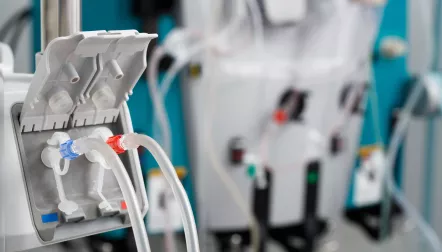
Learn about choosing a hemodialysis plan that's right for you.

Genetic causes of kidney disease are more common than many realize. Genetic testing looks for changes in your DNA that can cause kidney disease. Learn about the benefits of genetic testing for determining the cause of your kidney disease and how genetic tests are performed.