


Blog post
'It came from within me': Kafayat Onanuga shares her story of donating a kidney to her mother with help from AKF's Living Donor Assistance Program
Kafayat Onanuga discusses what led her to donate a kidney to her mother, and how AKF made the donation process easier.
This story is part of a series highlighting how AKF's Living Donor Assistance Program™ is helping ease the financial burden associated with living kidney donors as they give the gift of life.
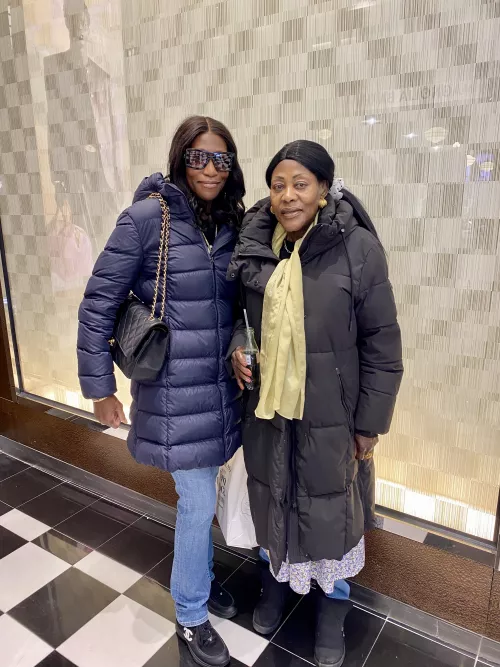
Kafayat Onanuga has been very close to her mother for as long as she can remember. It all goes back to when Kafayat and her siblings lost their father over 30 years ago, when they were young children. "[My mom] was a single mom at my age–36–back then," Kafayat said, describing how her mother struggled and sacrificed to raise her and her siblings. It was this closeness and Kafayat's sense of gratitude for her mother's selflessness that moved Kafayat to give an incredible gift―a new kidney and a second chance at life―to her mother last year.
"I said, 'I owe it to her,'" Kafayat said about learning that her mother — who has struggled with diabetes and high blood pressure for years―was in kidney failure and would need either dialysis or a transplant to survive. Unfortunately, a person can wait years for a deceased donor kidney to become available for transplant; however, anyone who is a match can donate now, as a living donor. After learning this, Kafayat decided she would step up to the plate.

"[My mother] was against it and my siblings were against it, but I said, 'I don't care; I want to do it―it just came from within me," Kafayat said. "The same way she didn't think twice when she put [my siblings and I] first, I didn't bother thinking twice [about this]." After tests confirmed she was a match for her mother, the surgery was scheduled and took place on Aug. 27, 2024, at Mount Sinai Hospital in New York City.
Both Kafayat and her mother are doing well and are healthy over a year post-transplant, although Kafayat's recovery was not instantaneous. It took her six weeks to get back to work, and the pain at the incision site was noticeable for some time. "When I woke up [after the surgery], the pain was there," Kafayat said. "[I was unable] to stand up straight for about three to four weeks. But I recovered, so it was okay."
Kafayat's recovery was supported by AKF's Living Donor Assistance Program, which she learned about from her transplant social worker at Mount Sinai. The goal of the program is to increase access to living kidney donations by reimbursing out-of-pocket costs incurred by living kidney donors. "Every now and then we all need help," Kafayat said.
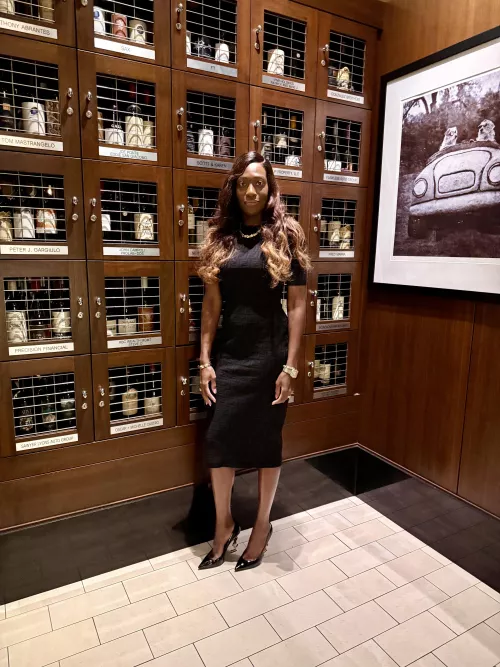
Specifically, funding from the program helped cover the cost of meals and transportation and supplement Kafayat's income when she was unable to go into work. "It made a big difference," she said.
Kafayat urged anyone who is considering becoming a living organ donor to look within themselves for guidance. "If it's really from within you, without any ties or any strings and there's nothing that you're looking for from it, and it's for someone who is really and truly dear to you, I would say 'go ahead,'" she said.
To learn more about becoming a living donor, visit AKF's website.
Get more information about AKF's Living Donor Assistance Program here.

Related articles

Blog post
AKF's Living Donor Assistance Program helped make it possible

Press release
Emergency grants of $250 from AKF are available for dialysis and post-transplant patients living in Kauai, Honolulu and Maui counties

Press release
AKF has activated its Disaster Relief Program to assist dialysis and post-transplant patients affected by the wildfires in Washington state.

Blog post
Marcus and Callie Payne share how, through IVF and PGT, they were able to have a baby who does not have PKD