


The Kidney Collective: I Wish Others Knew About Being a Living Kidney Donor
A conversation with Marnisha Mintlow, as part of The Kidney Collective's introductory podcast series.
Nov. 12, 2025 | The Kidney Collective
In this episode of The Kidney Collective, Tamara and Mike chat with living kidney donor Marnisha Mintlow about her decision to donate her kidney, her surgery and recovery, the barriers and fears that may prevent people from becoming donors, and the importance of more transparency around the kidney donation process. Marnisha emphasizes the need for more support and advocacy for living donor rights and protections, and the significance of finding help and a found family within the kidney community.
About Our Guest
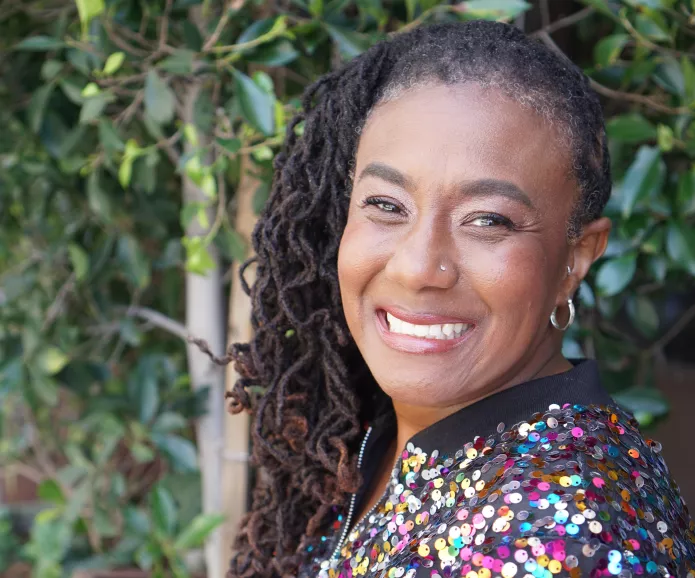
Marnisha Mintlow
Marnisha is a Marine Corps veteran and a current educator living in Santa Clarita, California, who recently graduated with her doctorate in education from the University of Dayton. In 2016, she made the selfless choice to become a living kidney donor.
Show Notes
- Marnisha has always understood the importance of being an organ donor and giving back to her community. She put herself as an organ donor on her driver's license after her uncle passed away and she found out he was also a donor.
- Marnisha was initially reluctant to become a living donor but came to her decision through her faith.
- Marnisha went through testing and conducted extensive research prior to becoming a living donor, including speaking with other living kidney donors (including her former teacher!).
- The emotional connection Marnisha formed with her kidney recipient and the help she received from her family emphasized the significance of support systems for living donors during recovery.
- Marnisha's recovery didn't slow her down, and life post-donation has involved her moving states and getting her doctorate.
- Marnisha acknowledges the barriers and fears that prevent people from becoming donors, and stresses the need to advocate for living donor rights and protections. See our Living Donor Report Card for more information.
Chapters
- 00:00: Introduction to The Kidney Collective
- 01:11: Getting to Know Marnisha
- 02:41: Marnisha's Decision to Donate Her Kidney
- 07:13: Researching and Preparing for Surgery
- 09:39: Advice to Those Considering Donating
- 11:42: Advice to Those Looking for a Donor
- 13:20: Marnisha's Recipient and Forming a Close Bond
- 16:46: Surgery, Recovery and Life Post-Donation
- 23:33: Barriers to Donation and the Importance of Education
- 27:44: Protections for Living Donors and Why More Advocacy is Needed
- 36:30: Recap of Marnisha's Conversation
Transcript
Marnisha Mintlow: Hi, my name is Marnisha Mintlow and I'm a living kidney donor. I wish others knew that as a living kidney donor, you can lead a great, productive life with one kidney.
Tamara Ruggiero: Hello, I'm Tamara Ruggiero.
Mike Spigler: And I'm Mike Spigler.
Tamara Ruggiero: And welcome to The Kidney Collective, a podcast series that gives voice to what it's really like to live with kidney disease. In each episode of this limited series, we'll talk to a member of the kidney community about their experience, including what they wish they had known before their journey began.
Mike Spigler: Join us for a personal look at what life is like in The Kidney Collective and come away with information and inspiration to help you know how to take charge of your kidney health.
Tamara Ruggiero: Joining us today is Marnisha Mintlow, a Marine Corps veteran and a current educator who just graduated with her doctorate in education from the University of Dayton, who currently lives in Santa Clarita, California. In 2016, she made the incredible choice to become a living kidney donor. And today, she will tell us more about that experience.
So Marnisha, thank you so much for being with us today. We can't wait to talk to you about your experience of living kidney donation. But before that, wanted to just get to know you a little bit. First of all, congratulations on recently receiving your doctorate. Can you tell us a little bit about that?
Marnisha Mintlow: Thank you. So I'm so excited to be here. I've been telling my family all week, I'm on a podcast this week recording. So I am originally from Dayton, Ohio. As you said, I joined the Marine Corps shortly after high school. That allowed me to travel to South Carolina, Mississippi, and North Carolina. So that was the extent of my military service. I was what they call in and out. I did one term, moved to Virginia after my military service where I got my bachelor's degree in business. And that is where I started teaching.
I tell people I've taught everybody and everything from pre-K to adult. And I went on, got my master's in business, and as you stated, recently got my doctorate of education from the University of Dayton. So I went, didn't physically go back home, but took the online courses and graduated from one of the universities back home in Dayton. So doctorate of education in leadership for organizations. So now I'm ready to change the world.
Mike Spigler: It's great. And it definitely seems like you were doing that already with some of the things that you've done and certainly what we're talking about today and the fact that you made the decision to give the gift of life. What kind of led you to think about kind of that giving kind of mentality?
Marnisha Mintlow: The short story of it is I'm a church girl, right? Born and raised in a church. We've always been taught about giving to those less fortunate, that mantra. I don't think I actually put organ donor on my license until my uncle passed away and I found out he was an organ donor. And my aunt talked about getting the letter from the person who had received his eyes and things like that. So I said, oh my gosh, this is like one of the most dearest uncles to my heart. I was like, oh, I'm going to follow in his favorite footsteps and I'm going to put organ donor on my license. So I did that.
And then years passed. And one of my high school classmates, we graduated high school together. She did a Facebook post. She created a Facebook group that said, "Deontay needs a kidney". That's her husband. I had no desire and no thought to give, be a living donor, right, to donate now. So I just prayed as I did in my daily walk. I've seen these type of posts before people needing a kidney, prayers for people with cancer and different terminal illnesses, prayers for people with lupus. So I was just praying, right? Lord, let the donor reveal themselves. And I heard "give life". Now, my first reaction was I have already got children. This is not for me. So I just kind of disregarded and went on about my day.
So my classmate does another post and she said, here's a number you can call to check to make sure, you know, to see if you are eligible, if you fit the requirements. So I began to pray again. I said, Lord, let this donor reveal themselves, let you know the people with cancer, all these things. And I heard "give life" again. I said, okay. I said, I'm be a good Christian woman and I'm gonna call this number. They're gonna tell me no, and I'm gonna move on. But I am going to be able to say I did what the Lord asked me to do.
So I called the number, me and the nurse are talking. She asked me my blood type. I say A+. She said, "That's great! You and the donor have the same blood type." I said, hold on, wait a minute, that can't be right. Because in my mind, right, to me, I'm like, this is not supposed to happen. So I run out to my car because I had my dog tag in my car and I checked because on our dog tags it has our blood type. And sure enough, it said A+. And I said, oh my God, this is for real. So that was how it started and then it just continued. I had to give the tubes of blood. I was in Virginia. At this time I was living in Virginia and my recipient lived in Ohio. At that time, probably about a 10-hour drive in distance. I would donate my blood in Virginia. It got sent back to Ohio. I would drive to Ohio to do the test and all of that. In April 2016, surgery was a success.
Tamara Ruggiero: That's such an amazing story. And I'm struck by the persistence that you had to show because you were living far apart from your recipient. The process for becoming a donor is pretty involved. We want to talk to you a little bit about that in more detail. But what inspired you to stick with it throughout the process, throughout the pre-transplant process?
Marnisha Mintlow: I would say that it was because I felt it was God ordained, right? It wasn't something that I wanted to do. Like I said, I was like, no, not me. I'm good. I signed up to be an organ donor when I die. Not right now, right? At the end, right? When I've used them all up and they're all done, I'm done with them. Didn't pass them along. So I just feel like it was God ordained and he was leading me like this was something for me to do right now. I mean, as long as it was going I was going, like I knew that there was a possibility with all the extensive testing that something could come out and they'd be like, "Oh, I'm sorry, you didn't pass this test. But thank you so much for your time." And I'm like, well, I did what I was asked to do. And I'm out. But it went the entire way.
Mike Spigler: So just and obviously, you know, you're a prime example of someone that can live just fine with one kidney. But I think a lot of people don't know that. I mean, did you have to do some research to look into that and understand kind of what that meant for you and your health moving forward? I mean, a lot of people couldn't even tell you, there's a good number of people who can't tell you how many kidneys people have let alone what it's gonna mean as a living donor. So what did you go through to kind of prepare yourself and teach yourself?
Marnisha Mintlow: To prepare myself, the first thing I was concerned about was the scar. So I started looking at kidney removal scars, and of course all the scars that they showed were the long horrible scars that went all the way down. I was like, oh my goodness, I'm gonna need a tattoo or something to cover this up. This is horrendous. But then I discovered that I was going to be doing laparoscopic kidney removal. So I just had three little dots. Okay, that's much better.
And then there was research like, so what happens after? Lucky for me, luckily for me, I knew someone who had donated a kidney. So. I was able to see her living her life just as full, still traveling and doing any and everything that someone would do. So was able to reach out to her and speak with her. Also, I went through, the University of Cincinnati conducted our transplant, and they put me in contact with other kidney donors who I was able to talk to. And the funny story about that is one of them, one of the people they put me in contact with was actually my middle school math teacher. Math and science teacher. So to be able to call someone and the name look familiar and you call them you say "is there any chance that you taught middle school at Stivers Middle School?" And she's like yes. I said okay because I was your student the seventh and eighth grade. It's just like, I thought that was you. The last name was different but, you know, it's not a lot of Marnishas in the world.
So that was amazing and to have her come to my parents home and we sit down and chat about how it is after you donate and what it's like, and to find out there's not much that you stop doing.
Tamara Ruggiero: Wow. And I think your experience is so telling because you were able to connect with some people who had donated. And we often hear from people who are thinking about being living kidney donors, "I wish I could talk to someone who's given a kidney so I could really understand what the experience is all about." What advice would you give to somebody who's thinking about becoming a living donor?
Marnisha Mintlow: Well, there are outstanding organizations like this one, right, that have a list of kidney donors that they should be able to reach out to, you know, reach out to the organization and they'll be able to put you in contact with someone who is a living kidney donor and you can create that relationship and they can give you that good information to let you know the ups and downs. Like I didn't know until recently that I am considered to have chronic kidney disease, not because I actually have it, but because they just want to keep an extra watch on me because I only have one kidney. So that's how they classify me in the system.
So they kind of know, okay, wait, be careful. Certain things like I can't take non-steroid anti-inflammatory drugs. So for pain medication, I just can't take anything off the shelf. It's pretty much Tylenol for me. But when it says that in my chart that I'm a chronic kidney disease patient, the doctors kind of automatically know that and I don't have to be mindful and kind of tell them all this good information.
So I think reaching out to an organization like AKF, it would be a good start to find living kidney donors if you don't know any already. There's always groups you can join on social media. If you Google it, there's organizations and groups you can find as well.
Mike Spigler: Marnisha on the flip side of that, you know, someone was very brave in putting their story out. Of course, I mean, it's, it's really life or death, right? When you're trying to get a kidney and putting that information out. But, you know, we've certainly talked to people in need of a kidney transplant who have been afraid to ask others in their community or in their circle about being a donor for them. You're a great example of someone that saw that, right, a post, and took the step to do it.
You know, if you're talking to someone, there's probably someone listening to this podcast right now who needs a kidney and doesn't really maybe have the confidence or courage to go out and ask people. What would you say to them about the importance of asking and just kind of getting the word out?
Marnisha Mintlow: You have not because you ask not. So if you don't ask, you're definitely not going to get it. But if you ask, you increase your probability of getting it exponentially, right? If you ask one person that may be one, though if you ask 10 people, so I used to be in sales right, you know in school you need a job, right? And they used to tell us like it starts with 10, right? You have to do at least 10 people but out of those 10, probability says you're going to get at least one yes, one buy.
So I'd say now, I think these statistics are probably a little bigger. You probably won't get a yes from 10. But what I would say is that out of those 10, you may get those 10 to tell another 10 about your situation, right? So now you're looking at 20 people that know and that 20 people you may not have had to ask personally, but 20 people know your story and they're going to share your story. And you may find out that you get a donor based off of you asking those 10 and them sharing your story.
Mike Spigler: And I love that comparison to like sales, right? I mean, that's the sales, kind of the sales mindset, right? I mean, if you ask 100 people, maybe you get 10, but when you're talking about life or death, I think it's an important aspect.
Tamara Ruggiero: Absolutely. What was it like when you told your recipient that you were a match? How did they react?
Marnisha Mintlow: It was very exciting. So it's started when I told them that I was going to give the blood, right? So everything was pretty much through social media, Facebook Messenger, Facebook posts, right? People are like, oh, good luck with the, when they did the post about calling the number. So I was like, I called and they're sending me the blood samples I'm going to give blood. And people are like, you're an angel. This is great. I was like, wait a minute. Nothing happened yet. This is, we don't even know if I'm gonna make it, if they're gonna pick me. We just, I'm just giving blood. But they were just so appreciative of the fact that I volunteered to do that, right? Because that's like the first step of many. But to have someone willing to take that first step, and then when it just kept going and we you know, then we exchanged phone numbers and we're talking about what's going on.
I got a call that they wanted me to come to Ohio to do the first round of testing. And because I didn't, you know, if you don't know the number, you don't answer the phone, right? So I didn't know the number. I was like, mm-mm. So I sent them to voicemail and then I got a transcript and it's like, this is such and such from the University of Cincinnati. I'm like, oh my goodness, right? So you can read it as we want you to come, you know, call us back to schedule. So that was like a big celebration day. Go down... I think that was the first time I actually met my recipient and met the whole family. My family meets their family and all of that. And then you become part of the family.
So we are family now, right? We say, that's my kidney brother, my kidney sister, like that's how it becomes and how it grows. Like my mom used to go to the, I think it was, I don't want to say the drug store. I don't want to give out brand names here. But she used to go to the drug store where my, uh, we went to high school together where she worked, right? Just because, right, that's family. I'm going to their drug store. I'm not going to the other one. Right? So it became like that type of family relationship.Mike Spigler: I've met several recipients who have named their kidney that has been transplanted in. I don't know. Do you, has your recipient named the kidney? I've heard Hercules, I've heard some great names.
Marnisha Mintlow: Well. I had to do a test where they looked at my kidneys because one of them was, they said, abnormally larger than the other. So they wanted to make sure everything was OK. So it's kind of like an X-ray ultrasound thing for the kidneys where you lay on your back and I could see my kidneys above me, but they looked like stars in the sky. And so I named them after my grandfather and my uncle who had passed away. The uncle who was an organ donor, right? I named them after them. So, it was Calvin and Moses. And Calvin is the one that was transplanted into my recipient. And so, he would call me and we'd be like, Calvin is working well. He's doing a great job. And I'm like, Moses is still hanging in there and doing well. So, both kidneys were named and that's how we refer to them when we talk about what's going on in kidney life, Calvin and Moses.
Mike Spigler: That's amazing, love it.
Tamara Ruggiero: Take us back to the day of surgery. The surgery is scheduled, you're at the hospital. Can you tell us a little bit more, just what was going through your head prior to the surgery? What was that experience like? And then talk to us a little bit about the recovery. How was the recovery for you and your recipient?
Marnisha Mintlow: The day of surgery was hectic, I'd say, in some ways. I remember going in, getting changed. My mom was with me. I remember having a smartwatch that kept going off. People were texting me all morning. And then I know that my recipient had to do a dialysis treatment before surgery. And it just seemed to be a long morning. Just sitting there waiting, right? Because I couldn't eat the night before, I do remember being hungry. Because even though we were there, I want to say at like six in the morning, mind you, we live, or where I was, I was in Dayton, right? Because that's where my parents live, that's where my recipient lives, Dayton, Ohio. And we had to travel to Cincinnati, Ohio, which is about 30, 45 minutes depending on the traffic. So if we had to be there at six, we were leaving the house at five o'clock, because thinking about what the traffic could be like. I was up very early, you know, they take you through all the, let me take your blood, let me get your IV started, all of that stuff. Then you're just waiting. So it's a lot of, how's things going? Right, to my mom. While I still have my phone scrolling on social media, seeing what's going on. A lot of people saying congratulations, good luck. I'm praying for you, things like that.
But that was what I remember before. And then I remember, know, okay, we're going to go ahead and take you back. You know, they give you some, some sleepy medicine. And then when you wake up, you have one kidney and they're like, you know, get on this scale. I was like, really? So that was like, an eye-breaker to wake up to a scale. I felt like my kidney should have weighed more. Because I got on the scale and I was like, sheesh, I didn't lose a lot from this kidney. I would have lost more weight. But it wasn't as big as I thought.
So, uh, after that I think I stayed in the hospital for a day. It was just a day. Um, I was adamant to go see my recipient. Like, where is he? I need to get out of here. "We need you to walk." Okay, well, let me walk down to where he is because I need to see him. What's going on? So I did get to see him before I left the hospital and he was up walking as well. So that was good.
There is pain in recovery. They gave me a kidney pillow, which was signed by the surgical team. I did walk a little slow for a while. So the kidney pillow was very comforting at night to help sleep on. It was weird because I actually felt more comfortable sleeping on that side. Even now, I feel more comfortable sleeping on the side that the kidney came out of. So, I don't know. I also tell people that during recovery, I feel like I could feel my other organs like stretching out to fill in the space. Like they felt like, oh, there's more room in here. I can't, you know, let me spread out and... So it's like when you go from sleeping in a twin bed to a king bed and you're like, oh, there's more room.
The one thing I would say that was a shocker to me was they told me I could not drive for two weeks. And I'm very independent. Like I like to go when I like to go and I don't like to be told no. So I said, what? I can't drive for two weeks? So I was just like, okay, I just have to have my parents drive me somewhere if I want to go somewhere, which, I really didn't want to go anywhere. But my parents had actually blocked my car in so I couldn't go anywhere. Even if I had to like try, let me be, let me sneak in, go to the grocery store. I wasn't going anywhere. My car was blocked in.
Mike Spigler: That's a sign your family really cares about you.
Marnisha Mintlow: Yeah, that was my recovery. Roughly two weeks after surgery, I drove from Ohio to Virginia. I drove back home. Went back to work as a special education assistant. And then, so that was like, it was like May. And then the end of June, I drove from Virginia to California. I moved. So kidney surgery slow you down? No.
Mike Spigler: So now fast forwarding. I mean, how has life been since then? I mean, obviously, look at everything you've accomplished. Anything that you're dealing with now or do you feel like you're back and even better?
Marnisha Mintlow: I feel like I'm back and better. I will say nothing has slowed me down. I do take my labs. I think we do them every six months. I go to see the nephrologist. I have a nephrology appointment coming up here soon, but there is not much change. Like I said, my pain medication is strictly Tylenol or the generic brand. Acetaminophen. I think I'm saying it right but that's the main thing that I pay attention to. Of course you drink water, but who doesn't? Everybody's supposed to drink water. Everything else is fine, regular life. I am, you know, just cautious about health issues. Things that do affect kidneys, I pay attention to that because I do only have one. So. Other than that, there is not much you learn. New vocabulary words about your body, creatinine levels are very important. And there's things that you learn to pay attention to. You watch more health issues with kidney issues and things of that nature. But I have not stopped. I have still worked multiple jobs. Since kidney donation, I went and got my master's and my doctorate. I bought a house. I work a lot of jobs, I do a lot of community service. No stopping me, you know, we're still going strong.
Tamara Ruggiero: What do you think holds more people back from saying yes to being a kidney donor?
Marnisha Mintlow: It is just a lot of fear. I think there is the fear of the unknown, right? There's a lot of misinformation. I know that even just to sign up to be an organ donor when you pass away, there is stigma that if you get in a car accident and you're an organ donor, they're going to let you die for your organs. I have to be like, wait. If you're in a car accident, nobody knows you're an organ donor until you die. They don't know, right? It's not like, "Oh, in a car accident, let's check their license, run their name. Are they organ donors? "That's not how it works, right? So there's a lot of fear. There's a lot of stigma.
I know specifically in the black community, there's a lot of fear around things that have happened in the past with like the Tuskegee experiments. And it's like, we have tons of issues. People are like, you know, "My grandma only went to the hospital one time and that's when she died so I'm not going." Maybe if she had went before, maybe she wouldn't die. Right? So there's a lot of stereotypes and old wives tales and just things that we have to battle against on a regular basis to let people know like, it's safe, it's okay, you'll be fine.
And the thing that you have to be healthy to be a kidney donor is something that people don't think about. Like people are like, "Oh, I drink every day and now I want to give a kidney." No, you don't. We don't want that. We don't want that kidney. "I smoke all the time and now I'm gonna give a kidney." No, that's ruined. We don't want that one. And then it's the fact that people are like, "I want to go in the ground how I came out." I'm like, but those organs are no good in the ground, right? You're wasting stuff, right? What do we talk about, reduce, reuse, recycle? Come on, let's recycle these organs. Let's reuse them.
So I think a lot of it is knowledge, information, education about the truth of what really happens. And there's just a lot of stigma that needs to be cleared up and shared and put out there. I think that this podcast is very important to have people come on and say what really happens, to have medical professionals come on and say, no, this is what we do. Although, there's still some work to be done in the medical profession and even within kidney disease. Like there's the creatinine level. And then they had that adjustment that they do and the non-adjustment. And when I was reading the research on it, like that was done in 1999. Like that wasn't that long ago where it's like, "Oh, you're black so it really doesn't affect you as much. We're going to adjust yours. And if you're white, then we don't adjust yours." And so black people were going longer without getting kidney health that they needed. But that was also because there wasn't a lot of black people that signed up for the study. But why didn't black people sign up for the study? Because they're still thinking about the Tuskegee experiment. "Oh, I don't want to do, they're not going to experiment on me. I don't want to be the guinea pig. They're just going to get me sick and kill me anyway." I'm like, oh my gosh, we're never going to find out how to fix us if we don't sign up to study us.
I understand that, you know, I understand the fear in it. Like, I don't know, but we can't. get better if we don't take that risk. I definitely sign up for test trials all the time. My kids talk about me. They're like, you're just a little guinea pig. I'm like I am and they gonna pay me for it too. I'm gonna get some free movie cars. I'm gonna get some gift cards. Give them to me. My kids love the little gifts that they get when I get those gift cards. But I know that that goes a long way into making sure that medication that is created is good for everybody and not just a specific or certain sector of people.
Mike Spigler: Marnisha, one of the things that we do here, obviously we do clinical trial awareness as well, but one of the things you related to living donation is we have something called the Living Donor Report Card, which, you know, it looks at state-by-state and the policies around things like time off of work, tax breaks, protections against discrimination in long-term care insurance, disability insurance. And we have a couple of states that have an A because they've done everything the right way and we've still got a couple of Fs. So we're still working on it. And AKF's worked really hard to try to get a national bill as well as some of the other groups as well that would bring everyone up to a minimum of C, but we still have a lot of work to do. Have you experienced any of issues with like time off work or like, you know, life insurance, long-term care insurance discrimination after being a donor?
Marnisha Mintlow: Oh, well, I'm so glad that you asked. When I donated, I was considered a part-time worker, so I didn't have to really apply for time off. I just said, listen, I'm going to get this procedure done. I'm going to be gone for two weeks. I think I said two, maybe three weeks and then I'll be back. So for me, it wasn't so much as time off as it was, I wasn't going to get paid for three weeks. So I was a part-time worker. If you don't work, you don't get paid. So there was that, so there was an organization that was able to give me grants, is what they called it, or a donation where it helped to pay some of those monthly bills to still keep me on track, even though I didn't get a paycheck.
As far as life insurance, one good thing is that I was in the military and I'm rated where I can still get medical healthcare and I'm able to get life insurance through the military. It's not a lot, but it's a little bit. So I wanted to add on to that, right? Oh, this is just a little bit, I need a little bit more. And through those life insurance policies, especially close to the time that I donated, so right around 2016, 2017, probably up until about 2020, I was denied life insurance because I only had one kidney. So I have been able to go to Washington DC and speak with Congress people and senators in regards to the Living Donor Protection Act to ensure that just because you donated a kidney doesn't mean you shouldn't be able to get life insurance. Like I said, you have to be extremely healthy to donate a kidney. So, why wouldn't you feel like you can give me life insurance?
I would say I haven't had any issues, but that doesn't mean that I'm not empathetic to the people who don't have the same benefits that I do. So I've still definitely advocating that we need to make sure that you give time off tax breaks because it's not, it is a an action of love and service, but it still also takes, it can be a financial burden. So like for me, I was driving back and forth from Virginia to Ohio. When we had to do the testing, that was a trip. I had to go back because the kidney was abnormally large. So that was another trip. I mean, I wasn't paying California gas prices, but still, that's a couple of tanks there and a couple of tanks back. Luckily, my parents live in Ohio, so I didn't have to do a hotel or anything. But then once we got to Dayton, where my parents live, we still had to drive to Cincinnati and back.
And so those financial burdens, you know, maybe we can give that as a tax write-off or, you know, a little something, a little help for saving a life.
Tamara Ruggiero:Thank you for sharing all those details, because I think that really illuminates all of the issues that people face when they're thinking about being a donor. One of the programs that we have launched recently at the American Kidney Fund is called the Living Donor Assistance Program. And it's in a few different geographies right now. Mike can talk about it in more detail, but it's basically, the purpose of it is to reimburse living donors for those out-of-pocket expenses that you incur that the recipient's insurance doesn't pay for. And so we're seeing a great response to it from people who are grateful that the program exists. And we're trying to get the word out really to patients who are talking to someone about being a living donor, "Hey, you might live in this particular geography where the Living Donor Assistance Program is active currently. And there might be assistance available for you from the American Kidney Fund." Mike, I don't know if you want to add anything about it.
Mike Spigler: Yeah, so we're growing the program. It started with a couple who were on the receiving end of a kidney from a living donor and were able to do a large social media campaign and fly in lots of people to get tested. But they realized a lot of people didn't have that ability to do that. So they wanted to give back when they got that kidney. So we started in Massachusetts. So we're in the entire state of Massachusetts, moved to New York City. We're now in DC, Maryland and Virginia, July 1st of 2025 we start in Illinois as well and we're looking at several other locations as well. And, you know, we're trying to be kind of a wrap around for some of the other programs that are out there. And unfortunately, we've heard that some of those programs are going through some cuts with everything that's happening, budgets everywhere around the country right now, unfortunately. So we really feel like we're kind of meeting a need there, but we can help patients up to $2,500 with a lot of those things, including loss of wages that you just mentioned.
Marnisha Mintlow: Yeah. So that's, that's really part of the education part. Like I can understand somebody saying, "Listen, I can't donate a kidney. I can't take that time off from work. I can't miss that money and, are they going to cut me from my life insurance with this?" And things like that could definitely be deterrent to someone doing this. Like we talked about the numbers of how many people are on the waiting list for kidneys. If everyone in America was signed up to be an organ donor for when you pass away or was okay with being a living kidney donor, we could eliminate the entire list. We wouldn't even have a list. It'd be like, okay, we're good. We have so many programs designed to help find the kidney donors, but I feel like there's not enough programs to support the kidney donors through the process. Right?
So we have the, I forget what it's called, but it's like, you want to donate, but you don't match that person, but you match this person over here and someone that wants to donate them doesn't match them, but they match the person so you can still give, but you're donating to someone else.
Mike Spigler: Yeah. Shared exchanges and chains, and those chains are crazy now. They've gone to like 18 or 20 people. I've heard it's like all these flip-flaps, but the lives are saved.
Marnisha Mintlow: So if we are willing to go through all that, right, 20 people flip-flapping, matching, mixing and matching to make sure that we save 20 lives, but we can't make sure that we give them gas money to get to the doctors or the pharmacists, we can do better than that.
Tamara Ruggiero: Absolutely. Marnisha, before we wrap up, did you have any final thoughts you wanted to share?
Marnisha Mintlow: I just think that this is a great thing that you are doing at the American Kidney Fund. I definitely appreciate the hard work that you are doing for the kidney donors and kidney recipients. I want to make sure that people understand the reality of chronic kidney disease and the other kidney diseases, because it's not just diabetes is the reason, is not the only reason why people may need a new kidney, right? There's several diseases that will affect the kidneys and why someone may need a replacement.
So just thank you for your willingness to provide education. As I said, I think that's probably one of the first steps to making sure that we have enough kidney donors that have to be educated about what the process is and how it's not really a change to your life. It's really good.
Mike Spigler: Thanks again, Marnisha, for sharing your story and your advice today. And we're so appreciative of the choice that you made to give the gift of life.
Tamara Ruggiero: Well, Marnisha's episode was so inspiring. A living donor who really felt called to give. And I think her story shows how one act of generosity can completely transform lives.
Mike Spigler: Yeah, I mean the need for kidney donors is so huge. The need for kidneys is huge and you know, for someone who just felt that kind of a calling to go and do that and to really make a difference in not just her recipient's life but really, you know, that whole chain that came from that is really inspiring.
Tamara Ruggiero: What did you think about what she had to say about the misconceptions around organ donation?
Mike Spigler: Well, I think we hear that a lot. You know, especially in communities of color, it's an issue that continues to be pervasive. And it's unfortunate because in those communities, that's where kidneys are needed the most. So we've really got to try to eliminate some of those misconceptions where we can provide that education and support for living donors, not only in preparing for the donation, but making sure that there's not any financial repercussions. And that's something AKF really cares about here and something that she talked about as well.
Tamara Ruggiero: Yeah. And I also, one other thing I wanted to say is I found it inspiring how she talked about speaking up and asking, making that ask, going to your community, making the ask for the kidney. I know that so many people struggle with just getting to that point of feeling comfortable asking people to consider being a living donor.
Mike Spigler: Absolutely. And I think for anyone afraid to ask for a donor, maybe this is your sign to speak up and give it a shot. I mean, there are people that care about you in your life that would rather make this gift of life than see you continue to struggle, and just have that confidence to be able to try to go out and do that is something we hope you'll take to heart.
Tamara Ruggiero: 100%. Well, again, thank you, Marnisha, for being with us. And thank you to everybody who listened in. I hope everybody enjoyed that episode as much as we did.
Tamara Ruggiero: To find out more about the topics we discussed in this episode or to access resources to learn more about kidney disease, go to the episode show notes on your podcast listening platform or go to kidneyfund.org/podcast. And if you haven't already, be sure to subscribe or follow the Kidney Collective wherever you listen to podcasts and leave us a like or review to help us reach more members of the kidney community.
Mike Spigler: You can also follow AKF on all major social media platforms including Facebook, Instagram, TikTok, Blue Sky, LinkedIn, YouTube, Twitter X or whatever comes next. Join us next time. Remember that even in the toughest moments, there's hope ahead and the Kidney Collective and AKF are here for you now.
Related resources
Infórmese de cómo se dona un riñón y cómo se sopesan los beneficios y los riesgos antes de donarlo
Artículo
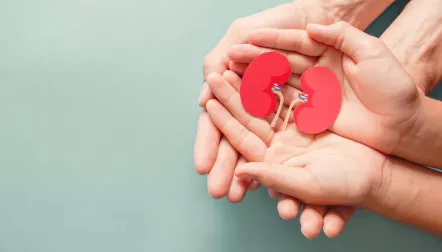
Si necesita un trasplante renal o está pensando en donar un riñón, la donación en vida puede ser una opción. Un trasplante renal de un donante vivo suele durar más que un trasplante de un donante fallecido (donación después de la muerte) y puede ayudar a los receptores a recibir ...
The American Kidney Fund's (AKF) Living Donor Assistance Program aims to increase access to living kidney donation by reimbursing living kidney donors in the United States for out-of-pocket costs they incurred as part of the donation process.