


The Kidney Collective: I Wish I Knew I Could Crash Into Kidney Failure
A conversation with Alex Simmons, as part of The Kidney Collective's introductory podcast series.
Aug. 14, 2025 | The Kidney Collective
In this episode of The Kidney Collective, hosts Tamara Ruggiero and Mike Spigler speak with Alex Simmons, a kidney transplant recipient and fitness instructor, about his unexpected journey with kidney disease. Alex shares his experiences from diagnosis to dialysis, the challenges he faced, and the importance of raising awareness about kidney health.
About Our Guest
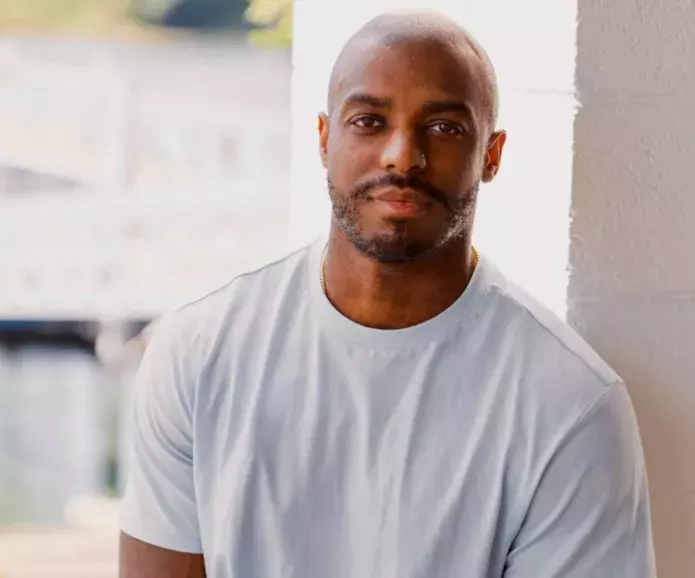
Alex Simmons
Alex Simmons is an athlete, fitness instructor, “girl dad” and kidney transplant recipient. He is the owner of the Pray Focus Grind gym in Pittsburgh, Pennsylvania. Despite having been in exceptional shape his whole life, he unexpectedly was diagnosed with kidney failure on February 1, 2023. He is active in spreading awareness for kidney disease and has even worked with AKF on our AMKD Awareness Day initiative.
Show Notes
- Alex was diagnosed with kidney failure unexpectedly. His sister was a living donor for his transplant.
- Alex encourages others to stay positive and proactive. Because dialysis can be physically draining and isolating, support systems are crucial.
- Regular testing can help catch kidney issues early, and raising awareness can help others understand kidney health better.
- Mental health is an important aspect of dealing with kidney disease. It's okay to take time off for recovery and self-care.
- Listeners can follow Alex on X, Instagram and TikTok at @AverageBlackMan.
Chapters
- 00:00: Introduction to The Kidney Collective
- 02:43: Life Before Diagnosis
- 05:53: Alex's Dialysis Journey
- 09:27: Getting Diagnosed and Knowing Your Cause
- 11:26: Alex's Transplant Journey
- 12:44: Looking for a Kidney Donor
- 14:43: Genetic Testing and APOL-Mediated Kidney Disease
- 16:13: Early Detection, Prevention and Kidney Health Awareness
- 19:06: Mental and Emotional Resilience
- 24:42: Recap of Alex's Conversation
Transcript
Alex Simmons: Hi, my name's Alex Simmons and I wish other people knew you could crash into kidney failure just like I did.
Tamara Ruggiero: Hello, I'm Tamara Ruggiero
Mike Spigler: I'm Mike Spigler.
Tamara Ruggiero: And welcome to The Kidney Collective, a podcast series that gives voice to what it's really like to live with kidney disease. In each episode of this limited series, we'll talk to a member of the kidney community about their experience, including what they wish they had known before their journey began.
Mike Spigler: Join us for a personal look at what life is like in the kidney collective and come away with information and inspiration to help you know how to take charge of your kidney health.
Mike Spigler: Alex Simmons is an athlete, fitness instructor, girl dad, and kidney transplant recipient. He is the owner of the Pray Focus Grind Gym in Pittsburgh, Pennsylvania. He's been in outstanding physical shape his whole life, but he was very unexpectedly diagnosed with kidney failure on February 1st, 2023.
Tamara Ruggiero: He crashed into dialysis like so many of our listeners. Alex is active in spreading awareness about kidney disease and he has been a great partner to AKF on that. And we're really looking forward to talking to him today about his life and his kidney journey. So welcome Alex.
Alex Simmons: Hi, guys. Thanks. Thanks, Tamara and Mike.
Mike Spigler: Alex, we're really glad to have you here and we've been so thankful for the work that you've done to help promote AMKD Awareness Day and honestly everything that you do on your social channels. I mean, they're very uplifting messages, kind of straight talk messages. I just wondering, you know, I'm so bad at social media myself and taking the time to actually do those things. I probably should do more of it, but it's so hard to find the time and the creativity. You know, where do you get that inspiration from and how do you keep doing that with your great kind of social media accounts that you have?
Alex Simmons: Yeah, I guess growing up playing sports, you know, lot of a lot of coaches always tell you a little life hacks and they just sort of stick with you and you start to just generate your own and just becomes a part of your life. It's very easy for me to just spread these on a daily basis because everyone needs inspiration or just to hear something in a different perspective. And, you know, that's just my goal is to spread positivity and maybe make someone look at a situation a different way. And that's about it.
Mike Spigler: Well you're doing a great job at it. I think I have, I would be the moon to your earth as far as my social media followers, because I think we could probably fit mine in a small room. So congratulations on building such a great following too.
Alex Simmons: Appreciate it. I appreciate that.
Tamara Ruggiero: Well, again, Alex, thanks for being with us today. And we've been so looking forward to having this conversation with you. And we thought we could start by just talking a little bit about your life before your kidney disease diagnosis. What was life like before you got the diagnosis?
Alex Simmons: So life before my diagnosis, I was active my whole life, played sports my whole life. I'm a personal trainer here out in Pittsburgh. So just very active, very moving. When I got diagnosed, everything changed for that. I actually went to the hospital end of January. I actually thought I had kidney stones just the way I was feeling. So the first thing they did was they took my blood and my blood pressure was 260 over 150. So I stayed for a couple more tests. About a week later, I left the hospital on dialysis and started the journey that I'm on now.
Mike Spigler: What did you know about kidney disease before this happened? What did you know about the kidneys in general? I mean, obviously you're into health and fitness, so you probably knew a little bit, but I mean, this is probably a whole new world, I would imagine.
Alex Simmons: Definitely. Yeah, you said it, said it perfectly, Mike. I knew a little bit um when I got diagnosed, I was already stage four. So, like I said, I got my port in the hospital. I started dialysis in the hospital, then left and I went to inpatient dialysis the whole time. But I knew nothing about kidneys. You know, we'll say just basically what the average American knows. So when I got diagnosed, my mind was thinking, how do we fix this? What can we do? It didn't register that this can't be fixed, we need to do these steps. So I was just like, what pill do I take? What diet changes so I can just fix this and start the ball rolling. Probably halfway through six months, probably in the dialysis, everything started to make sense. I started to search for more information. Led me to, to you guys very, very informational with all the material. And so I'm still learning, to be honest with you.
Tamara Ruggiero: Yeah, I think that experience of just crashing into kidney failure is so, unfortunately, so common among people. And we hear all the time from people that they just didn't know anything about what dialysis would be like or what was in store for them when they went to the hospital, you know, feeling ill with something that turned out to be kidney failure. What do you wish the average person knew about what it's like to be on dialysis?
Alex Simmons: What it's like to be on dialysis. So I was on dialysis three days a week, four hours a session, 6 a.m., Tuesday, Thursday, Saturday. So for a lot of people that don't know about dialysis, the basic form is, the basic, what dialysis basically is, is it takes all your blood out, filters it, and puts it back in your body. So for me, I felt just physically drained. So those three days of the week, I'm pretty useless to the world. Just energy wise and everything. I didn't actually work those days a lot just because I didn't have the energy So you're just tired I like to say for no reason Really? You can't you got enough sleep you did all these things and it just takes everything out of you and four hours sitting in a chair hooked up you're surrounded by other people that are on dialysis And for my situation, I was young, fit, and in shape. So everyone around me just did not look you know, healthy, they had other ailments, older, a lot of the older people. So for me, it was just an eye opener of, how am I sitting in this chair? I'm doing everything right my entire life, but you know, I have the same result here.
Mike Spigler: Yeah. What were you doing for work at the time? Because I think a lot of people don't understand how challenging that is. I you just made a good point about but a lot of people, especially when they quote unquote kind of crash into dialysis without a lot of warning, it's really hard to maintain a job, nine to five for sure. And we have programs that help patients with some of the financial challenges that come with that, with our charitable assistance programs. But what were you doing and how did you try to adapt to that?
Alex Simmons: Yeah. So, fortunately for me, I had my gym at the time. so all my clients were obviously okay with everything, but, I could physically come to work on the dialysis days, but my clients would have to set up the workout so I could just navigate. I have a big ball that I would sit on probably throughout the whole session just because me getting up and down, with my blood pressure rising and dropping, I just felt, like I was going to pass out. So for me, it didn't really change too much work wise. So I was just very thankful for that. like, cause I can't imagine, you know, that's 12 hours out of your day or 12 hours out of your week, let alone how you feel. I can't imagine, like you said, people that have a nine to five or a corporate job or something where you have to be there. You can't really take time off.
Mike Spigler: It's so inspirational to me to think about you going through all that physically and still helping people on their own kind of exercise journey and fitness journey. It's really impressive.
Alex Simmons: It kept me going too as well to see my clients working and so I have to keep fighting too as well.
Tamara Ruggiero: Alex, so many of our listeners are on dialysis. Many of them are probably watching or listening to this while they're in the chair right now. And for people who are newer to dialysis, I imagine that you had to go through a process of explaining to friends and family what was going on with you and trying to help them understand. What did you say to your friends and family? And did they understand it right away? You know, did you get the support you were looking for or just kind of talk through what that experience was like? Because I think that would resonate with a lot of folks.
Alex Simmons: Yeah. So a lot of the the elders in my life, they understood the whole concept. A lot of kids my age didn't really understand. They're like, so dialysis is a fix? This is it? So you just get a transplant and you're good then? You know, all these things. And it was very hard to try to relay it to them because one everyone just looking at me like you're in shape. You're healthy. I don't understand. I'm like, I don't I don't understand either but um, for new people starting dialysis would be definitely have a support system I would say. Don't miss your sessions at all and bring a blanket because it does get cold and a book, have something to read. But for me the treatment was pretty smooth. I've met a lot of friends because I had a designated chair. So the same person sitting next to me, same person on my other side. So you got a family there because we're all fighting at the same time. Uh, staff is great. Everyone's great. So, you know, I can't really complain about that situation.
Mike Spigler: And you know, there's so many patients that end up in your situation that I think the health system just kind of writes off because, okay, well, you're in dialysis, not much to do now. And many don't get a definitive diagnosis as to why and how. Can you talk about your diagnosis journey, you know, what you ended up being diagnosed with and how that came about?
Alex Simmons: So officially I don't really know my diagnosis what caused the kidney failure because my blood pressure was so high the first time I went to the hospital that they couldn't perform a biopsy. So I did genetic testing for APOL1 and I do have a G1 and G2 that I'm at a high risk. But officially we can't say was it my blood pressure was it that? Um, so, I don't know but they're leaning towards the blood pressure just because it was it was so high. so my diagnosis is kind of up in the air still.
Mike Spigler: Yeah, well you know, and we have a program here called the Unknown Causes of Kidney Disease Project, which I know you've contributed to before, which tries to help with that. We have a tool on our website called Know Your Cause that people can put in information and try to get that cause. And we just see so many patients that get diagnosed with high blood pressure because exactly what happened to you, right? You show up in the emergency room, your blood pressure's through the roof, there's no history they can pull from, so they say high blood pressure is probably the cause. And we're learning more and more that it just needs more work to be done to help really guarantee that's really where the problem is.
Alex Simmons: Definitely because I mean I looked at it as maybe since I did the genetic testing I said maybe this is something that I could have prevented I could have prolonged it but at some point in my life it was going to happen, so fortunately for me it happened when I was younger and fit so my body could fight it a lot you know a lot better than if I'm 70 or 80 so I'm very thankful that it did happen at the time it did.
Tamara Ruggiero: And then how long were you on dialysis?
Alex Simmons: So my whole journey actually from diagnosis to starting dialysis to transplant was a year. So um there's still people that at the clinic that are still there that I go and I pop in and say hi. So I'm very fortunate that my whole journey only took a year from start to start to finish from to transplant. Yes. Yes.
Tamara Ruggiero: Can you tell us about your transplant experience? How did you find a donor and just talk us through what that was like?
Alex Simmons: Um, I got my transplant out here at UPMC. So they did a very good job. When I got under registry, I had a link. So I would just share my link on social media, you know, just let anybody know. But fortunately, my sister was a match. So my sister actually donated her kidney to me, which is a very interesting story because me and my sister are both adopted. So we have completely different biological parents. But yeah, we were a match, so that worked out well, Yeah.
Mike Spigler: That's amazing. That is really amazing. Did she just kind of jump forward? I mean, there's some folks that we've talked to that are just afraid of asking anyone, even their family, out of feeling like being put upon them to do that. Did you have to ask or did she kind of just jump right at it?
Alex Simmons: Well, I didn't ask anybody, actually. Any family. I just shared a link. I didn't even talk to my sister. I didn't even know she did it until I got the call and my sister told me. So I didn't know because they only test one person at a time. So she probably was one of the first or probably the first one. So did all the tests and everything work. But yeah.
Mike Spigler: That must have been really emotional. Right. So what advice do you have for someone that, to have the courage to put that link out like that? I mean, what do you think, what advice do you have for someone who's doing that?
Alex Simmons: you have to step out of your comfort zone and you know, when you're talking about your health and maybe a relative, a friend or a stranger could help you. there's no shame in asking. mean, I drive around here, I see billboards and everything. So people need these items. So it doesn't hurt to ask. You never know.
Tamara Ruggiero: When you found out that your sister would be your donor, did she call you or did you get a call? How did that happen?
Alex Simmons: Well, I got the transplant. I think I got an email actually. I got an email from them that, you know, and then more testing and everything. Uh, then my sister did tell me, yeah, and very thankful. But at the same time, kind of upset because I don't didn't want her to donate. I'm the big brother, so I'm supposed to take care of you. But just calmed my ego a little bit and just was very thankful for the, you know, her stepping up to the plate. So.
Tamara Ruggiero: Yeah, we, we, talked to a lot of people who share a similar sentiment that they don't want a family member to donate to them. that they have concerns about it and they feel protective of their family member and don't. but I think one of the educational messages that we try to get out there is the safety of being a living donor and that you can live a long, totally normal life with one kidney. Yeah.
Alex Simmons: Yes. Yes yes. And my surgeon wouldn't even do the transplant unless it was a living donor. So, you know, thankful for that. The other challenge too with a donor and it's my sister was the medical team. They're like, that's great. It's your sister. It's your sister. And I kept trying to tell them, I said, talk to me like it's a stranger giving me their kidney. I need to hear that information rather than all the chances of this and that are so much better just because, you know, it's blood related. So that was a little bit of a struggle because they couldn't really understand that much.
Michael Spigler: Earlier, Alex, you talked about the genetic testing you had done and the variants. And, I had mentioned earlier that you've been very, very helpful in helping us promote AMKD Awareness Day and for our listeners that aren't familiar with that or are it for the first time, that's APOL1-mediated kidney disease. It is a, with two gene variants for those of African ancestry, can make you predisposed for kind of, there's a doctor that we work with that says it's like, instead of like a steam engine, it's like a bullet train to kidney failure when you have it. You know, you've been so helpful in helping promote that to your community and your followers. Why did you feel like that was important to do and have you gotten any feedback from your followers that have seen some of your messages?
Alex Simmons: Feedback, I've gotten a lot of feedback, a lot of feedback, which is good. It's helping a lot of people. But at the same time, I'm not educated enough to answer a lot of their questions. I just don't have the information. I'm not a doctor. I'm not a surgeon. So I try to I always point them to the AMKD and all those things. But I felt just a need just, you know, as humans, if we have information that could help somebody or like I said, if you have the gene, can just maybe prolong it so you could change your diet, do little things. Why not to share it? And for me, I live through it. I'm still living through it. So, you know, it's just my duty to try to help other people out before it starts or through it while it starts.
Tamara Ruggiero: I think what you're doing is fantastic in terms of raising awareness for people and giving people support um while you're going through it yourself. At AKF, we are continuously encouraging people to know your kidneys. There's millions of people at risk for kidney disease and nine out of 10 people with kidney disease don't know they have it. So we're working to educate people about prevention and management and early detection. And so I guess I'm wondering, what would you say to someone who maybe thinks they don't need to worry about kidney disease um or anything you'd like to say about the need for just more awareness in general?
Alex Simmons: There 100% needs to be more awareness in general, especially with kidneys, just in health in general. When we're younger, we just think we're invincible. We break something, we do that. But as you get older, you realize there's things that are working in your body that we haven't been thinking about our entire life. So just to be aware, I would definitely recommend getting blood work done, just to check your levels even once a year just to try to stay on top of it and just be proactive about the situation.
Tamara Ruggiero: Yeah. Do you know if like when you were going to your physicals, was that blood work happening and urine testing happening?
Alex Simmons: Yes, post transplant or pre?
Tamara Ruggiero: pre like before you crashed into kidney failure.
Alex Simmons: I believe I was getting blood once a week. I was getting my labs done post. I was getting it three times a week down the two down the one and every other. now luckily I'm once a month. I get my labs done. So.
Tamara Ruggiero: Yeah, and then thinking back to before you even knew you had a kidney issue when you went to the doctor, do you know if they do remember them talking to you about kidneys or testing, you know, testing your kidney health as part of your routine physical?
Alex Simmons: No, I couldn't even tell you the last time before I got diagnosed I actually got labs done. So like I said, if I would have it would have helped. I could have changed some things. And like I said, prolonged it. That's all. But now you're aware you can get more information rather than I have a year to crunch all this information and make decisions. So now maybe you have five years. So you already know the right questions to ask, what to look for. You're joining these groups. You're going to seminars. So you just have more material to, to help you through the process.
Mike Spigler: Yeah. And for those that might be listening, if you don't have kidney disease or if you have someone in your family that you care about that has not been diagnosed with kidney disease, I mean, it's so important to tell them to get tested for blood and urine, eGFR and UACR for their kidneys. And when you have that data, we certainly have tools on our website for Know Your Kidneys that you can go and kind of plug that in. Alex, I'm wondering, I'm thinking, you talked a lot about the physical effects of this, but what about like the mental and emotional of being like someone in such excellent shape? I mean, and you're still in excellent shape. I've seen your Instagram posts. You're still in excellent shape. So, you know, how did you deal with that mental impact of that?
Alex Simmons: I appreciate that. I appreciate that. Mentally, for me, actually, mentally, it wasn't really a challenge. I've had surgeries before, you know, my knee surgery, shorter surgery, but at the time I was playing football. So mentally, I'm just like, let's get cut open. Let's get ready. Rehab. Go, go, go, go, go. So that's the mentality I had going in after transplant and through everything. But it was completely different because it wasn't something that, six months, you'll be ready six, you know, so. It's still struggling for me, honestly. Right now I'm just happy to be able to work out. I'm nowhere close to working out the way I want to. But, you know, I listen to my body now. Sometimes I'm just exhausted. So that's changed and kind of frustrating because I want to do X amount of weight, but I can only do this amount of weight. So the biggest thing I've been trying to work on is for me, work working out is to look at it as physical therapy as we just have to start from zero and slowly progress as we can, as your body feels day to day. Because that's up and down just with all the medication still.
Mike Spigler: What advice do you have for someone that might be listening to this list? Tamara said, I'm sure we have someone that's on dialysis right now hearing this that is at zero right now. What's the first thing they should start to do to try to get back into an exercise routine?
Alex Simmons: The first thing is to walk and move to be honest with you because you're getting the blood flow and you know, when you're on dialysis, you could have a lot of swelling. So just to keep that circulation going and to not beat yourself up. Like I said, just look at it as physical therapy. Something happened. We're here now to to fix it and get back and hopefully better. So just take the ego out. You used to do these things, just baby steps, to be honest with you. And the hardest thing for me was listening to my body. Just some days you just can't and that's okay. It's not an excuse. You know, you're going through something that life changing, very traumatic. So it's okay to take a day off, two weeks off a week off. It's okay. You know, the biggest thing is making sure your health is, is there and ready so you can do the things you love to do. And also I wanted to piggyback when you were, we were talking about, I'm just getting tested and the labs done. So if I would have done labs, previously, I could have helped a lot because when I first got my first lab test done, my creatinine was a 15.2. So if anyone knows those numbers, it gradually got to a 15.2. So if I would have got testing done even once a year, I'm like, oh, it's a little elevated. We might need to change something. So I just want to piggyback on that previously, though.
Mike Spigler: I appreciate you saying that.
Tamara Ruggiero: I mean, I mean, I just look back to when I was in my 20s and I wouldn't even go to the doctor. I don't think I even had health insurance for years. You don't even think about it when you're young and healthy.
Alex Simmons: You don't at all. Yeah, it's little stuff. You can put a bandaid on, put a cast on, but as we get older, we find out that it's a lot of internal things that some are in our cards or some we cause that we're just not aware of.
Mike Spigler: Yeah, and I know, speaking as a guy, a lot of times I think we also kind of just dismiss some things, or even as you said, right? It's probably just kidney stones, even though there's something going on, it's probably just kidney stones. And with kidney disease being such a silent disease, as you experienced it, I think it's about 40 % of patients, four out of 10 people, happened to them exactly what happened to you.
Alex Simmons: 100%.
Mike Spigler: And the only way to really do it is the test. I just want to reiterate that again, is if you're listening to this and you have a family member, just go to your doctor and ask, how are my kidneys, doc? Can you check them for me? And make sure that they're doing not just a blood test, which a lot of people do get as kind of part of the typical blood panel, but that creatinine, which feeds into a number called eGFR, is still not only gonna find someone that's in like stage three or later. And the only way to really do it is the test. I just want to reiterate that again, is if you're listening to this and you have a family member, just go to your doctor and ask, how are my kidneys, doc? Can you check them for me? And make sure that they're doing not just a blood test, which a lot of people do get as kind of part of the typical blood panel, but that creatinine, which feeds into a number called eGFR, is still not only gonna find someone that's in like stage three or later.
Alex Simmons: Yeah. And to ask for those extra tests, the needle is already in you. So you're already getting labs done. So it's just maybe an extra tube and it's you know but it could help you a lot in the long run.
Tamara Ruggiero: Absolutely. Well, Alex, anything else you would like to share with our listeners before we wrap up?
Alex Simmons: Well, probably to everybody that's on dialysis now, just to keep fighting, keep positive mindset. Hopefully you have a good support team and to anyone listening that maybe knows someone that's going through dialysis, kidneys, thinking about it, is to not think about it. Like I said, go get the test done just to see, check your levels regularly. And, you know, hopefully everything works out for everybody. And just like I said, stay positive and there's always tomorrow.
Mike Spigler: Thank you so much, Alex. And we're going to drop your social links in the show notes, but just in case someone's listening only, where can they find you?
Alex Simmons: I appreciate it. Okay, so all my socials are average black man, Twitter, Instagram, and TikTok.
Tamara Ruggiero: Well, Mike, we had a great conversation with Alex Simmons. To me, he really touched on the importance of awareness, resilience, and the power of community. And I think, I mean, to me, his story drove home how kidney disease can strike when you least expect it and how important it is to listen to your body and get regular checks. What do you think?
Mike Spigler: And I think it also really emphasizes how it can happen to anyone. mean, he is extremely fit. He runs a gym for goodness sake. So I mean, really this can happen to anyone. And it's why it's so important that that basic kidney health that we really, you know, try to drive home with everyone about getting tested for kidney disease, asking your doctor questions, no matter your age or kind of physical health that you're in right now is so important.
Tamara Ruggiero: Yeah. And I think I really appreciated how he talked about that, you know, and really dispelling that myth that kidney disease only happens to certain people. really can happen to anyone. And I think one of the things we're trying to do with this podcast is, is, dispel that myth and make it clear to people that this is not kidney disease is not selective, right? It can happen to you. and I think his story really drives that home. I think another thing about Alex's story that I really appreciated him doing was opening up about the mental toll of dialysis and how really trying to stay positive and leaning on his support system helped him push through.
Mike Spigler: Yeah, and his willingness just to be open, period. I mean, the amount of things that he does on social media with Instagram and otherwise, just being vulnerable and talking about all the things that he's going through and really trying to inspire others was inspiring to me. So, really was a great conversation.
Tamara Ruggiero: Yeah, and I loved how he also talked about kidney health isn't just about survival, right? It's about thriving with the right mindset and community. And I appreciated him sort of talking about how he went about developing that community and connecting with people. I think that was a great message.
Mike Spigler: Absolutely. mean that that positive mindset has really helped him move forward and I'm hoping that his story will help others that are listening to this move forward too.
Tamara Ruggiero: Me too. So I hope our listeners enjoyed this as much as we did and looking forward to the next episode.
Tamara Ruggiero: To find out more about the topics we discussed in this episode or to access resources to learn more about kidney disease, go to the episode show notes on your podcast listening platform or go to kidneyfund.org slash podcast. And if you haven't already, be sure to subscribe or follow the Kidney Collective wherever you listen to podcasts and leave us a like or review to help us reach more members of the kidney community.
Mike Spigler: You can also follow AKF on all major social media platforms including Facebook, Instagram, TikTok, Blue Sky, LinkedIn, YouTube, Twitter X or whatever comes next. Join us next time. Remember that even in the toughest moments, there's hope ahead and the Kidney Collective and AKF are here for you now.
Related resources
Artículo
Infórmese sobre los aspectos mentales de la vida después del trasplante, incluido cómo pedir apoyo.

Infórmese sobre las variaciones genéticas del gen APOL1, que aumentan el riesgo de tener enfermedad renal en personas con ascendencia de África Central y Occidental. Esto puede incluir a personas que se identifican como personas negras, afroestadounidenses, afrocaribeñas y/o lati...

Artículo
Conozca las pruebas renales que pueden ayudar a los médicos a detectar la enfermedad renal en sus inicios, tales como los análisis de sangre, los análisis de orina, el ultrasonido renal y la biopsia renal.