


The Kidney Collective: I Wish I Knew My Diagnosis Earlier
A conversation with Nichole Jefferson, as part of The Kidney Collective's introductory podcast series.
Sept. 3, 2025 | The Kidney Collective
In this episode of The Kidney Collective, hosts Tamara Ruggiero and Mike Spigler speak with Nichole Jefferson, an advocate for kidney disease awareness and education, about her kidney disease diagnosis, experiences with dialysis, and the importance of asking questions and seeking answers about your health.
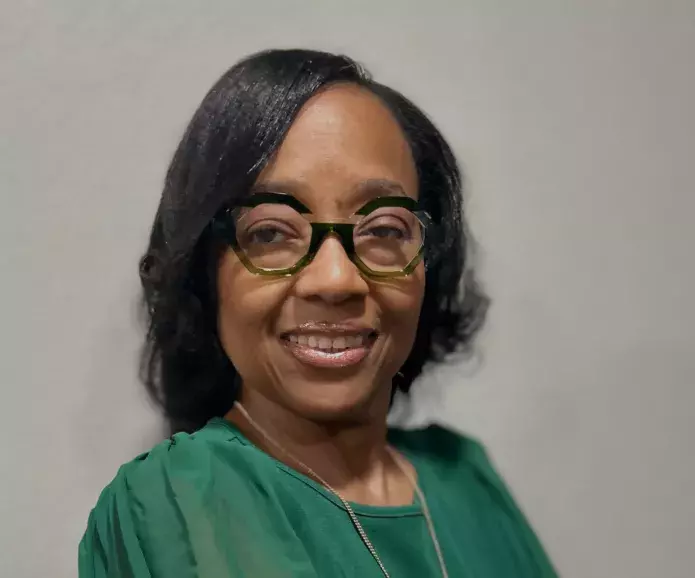
About Our Guest
Nichole Jefferson
Nichole Jefferson is an AKF Ambassador from Dallas, Texas who has dedicated herself to educating, empowering and uplifting the Black community on the topic of kidney disease. Nichole learned she had kidney disease in 2003 when she crashed into kidney failure. However, she did not learn that she has a rare kidney disease, IgA nephropathy, until 20 years later in 2023 – after doing hemodialysis and peritoneal dialysis and receiving a kidney transplant in 2008 and 2020. She has an unwavering commitment to driving change, fostering awareness and amplifying patient voices within the health care landscape.
Show Notes
- Mike and Tamara find out that contrary to our preliminary research, Nichole is NOT a Dallas Cowboys fan...but she is a very good sport about it.
- Nichole's journey with kidney disease began in 2003 when she crashed into kidney failure.
- She did not learn that she has a rare kidney disease, IgA nephropathy, until 20 years later in 2023 – after doing hemodialysis and peritoneal dialysis and receiving a kidney transplant in 2008 and 2020.
- Nichole's experience with dialysis was overwhelming, and she initially felt alone in her struggle. Mental health support is essential for kidney patients, as they often face unique challenges and feelings of loss. Building a community with other kidney patients can also provide emotional support and understanding.
- Sharing stories to raise awareness about kidney disease is crucial for driving change in the kidney community and ensuring better outcomes for future patients.
- It's important for patients to keep asking questions and seeking answers about their health.
Chapters
- 00:00: Introduction to The Kidney Collective
- 02:46: Giving Back to the Kidney Community
- 03:33: Nichole's Diagnosis Story and Crashing into Dialysis
- 06:10: Unknown Causes of Kidney Disease and Receiving Delayed Answers
- 11:28: Advice for Finding the Cause of Your Kidney Disease
- 13:41: Systematic Biases and What it Means to Have Answers in Health Care
- 16:00: Mental Tolls of Kidney Disease and Ways to Cope
- 19:48: The Gift of Giving and Receiving a Kidney
- 21:51: Why Genetic Testing Matters
- 24:18: What Advocacy Means to Nichole
- 25:38: Clinical Trials and Health Equity
- 29:26: Final Thoughts from Nichole to her Kidney Family
- 30:18: Recap of Nichole's Conversation
Transcript
Nichole Jefferson: Hello, my name is Nichole Jefferson. I wish I would have known my diagnosis earlier.
Tamara Ruggiero: Hello, I'm Tamara Ruggiero
Mike Spigler: I'm Mike Spigler.
Tamara Ruggiero: And welcome to The Kidney Collective, a podcast series that gives voice to what it's really like to live with kidney disease. In each episode of this limited series, we'll talk to a member of the kidney community about their experience, including what they wish they had known before their journey began.
Mike Spigler: Join us for a personal look at what life is like in the kidney collective and come away with information and inspiration to help you know how to take charge of your kidney health.
Mike Spigler: Today we are joined by Nichole Jefferson. Nichole is an AKF Ambassador from Dallas, Texas, and has dedicated herself to educating, empowering, and uplifting the black community on the topic of kidney disease. Nichole learned she had kidney disease in 2003, when she crashed into kidney failure. However, she did not learn that she has a rare kidney disease, IgA Nephropathy, until 20 years later in 2023 after doing hemodialysis and peritoneal dialysis and receiving a kidney transplant - both in 2008 and 2020. She has an unwavering commitment to driving change, fostering awareness, and amplifying patient voices within the healthcare landscape. Welcome Nichole.
Nichole Jefferson: Thank you, Mike.
Mike Spigler: So let me ask you the first question because I have my show notes here and I was a little confused because it said that you were a Dallas Cowboys fan, but I-
Nichole Jefferson: No it didn't!
Mike Spigler: I didn't..
Tamara Ruggiero: Yes, he will go there.
Mike Spigler: I didn't see them in the playoffs last year, so I just assumed they weren't still competing at any level. So I just wanted to make sure that maybe our team did not do the right level kind of background on this.
Nichole Jefferson: Yeah, no, that was not verified properly because I am not a Cowboys fan. (laughing)
Tamara Ruggiero: Oh! Ok!
Mike Spigler: Oh, ok! (laughing) Well that makes things a lot easier. So who are you a fan of?
Nichole Jefferson: Nobody. But if I had to choose, I would say the Texans, Houston Texans.
Tamara Ruggiero: Oh, he was all excited to tease you about the Cowboys.
Mike Spigler: I was! I'm a Commanders fan, right? So I was like, boy, this is gonna be a problem right from the jump. And I didn't, I've known you for a long time. And was like, I didn't know that dark side of you. So I'm glad that we can still continue to be friends.
Nichole Jefferson: Ok, thank you.
Mike Spigler: So, tell us a little bit about your journey. I mean, we've worked together on so many different projects. You know, as the intro said, you've worked on all kinds of areas from home dialysis access to clinical trials to transplant and rare disease. I guess the first question is, given all of your background and what you've done in this space, I mean, what is that drive that makes you kind of want to give back to the community? Let's start there before we even get in your story. Like, what makes you want to tell your story?
Nichole Jefferson: Well, because I thought I was the only one this happened to. And then when I met all these amazing people that are going through this as well, I realized, no, there are a lot of people going through it. And as I was going through my journey, I met people who, I have had a transplant, but they weren't vocal about it. And then I thought, the word needs to get out. Someone needs to tell the story of how we have so much kidney disease in the community, why we have so much kidney disease, and ways we can avoid or prevent it if possible. That's my drive.
Tamara Ruggiero: So Nichole, um tell us, how did it go when you were first diagnosed? What happened?
Nichole Jefferson: Oh wow. When I was first diagnosed with kidney failure, it was extremely upsetting of course. As Mike said, I crashed into dialysis. So here I was going along in a career, starting a career at the right time, raising my child. I thought everything was going fine. I thought I had the flu that just wouldn't go away. So I went to the emergency room and when I went to the emergency room, they said, why didn't you tell us your kidneys were failing? And I said, my kidneys aren't failing. And they said, yes, they are. And I said, well, wow. OK. And so my sister was in there with me. And she said, it's just kidney stones. Probably they'll give you some meds and you'll go home. And so I looked at the doctor and I said, a joking way, do you mean dialysis type of kidney problems? And he said, yes, you have to start dialysis immediately. And my world just flipped upside down because I didn't know what that meant for me, for my life at that time, because I was young.
Tamara Ruggiero: Yeah, I was going to ask if when you learned that had to dialysis, did you know that you would have to stay on dialysis? Did you know much about dialysis?
Nichole Jefferson: Yeah, I knew a lot about dialysis because, well not as much as I know now of course, but I had a great uncle who was on dialysis. And my great uncle had been on dialysis for a very long time and so even when we were younger growing up, you know, all the myths about how you end up with kidney disease and things like that, my grandmother would always say something if we were drinking soda. You're gonna end up on dialysis like your uncle. So. We always tried to avoid sodas because that's what we were told. But again, we didn't know the whole story. And so the very last time that I saw him in life, he was doing dialysis. And that was my first time seeing it in action. And I went to see him because I knew he was suffering and about to pass. And I saw all of this machine and all of this blood going here and there. And it was frightening. So when I found out I had to go on dialysis, I was thinking, surely I'm not going to have to do the same type of dialysis he did because surely things have changed by now. They hadn't.
Mike Spigler: Wow. I mean, you're probably speaking what a lot of people that are listening to this right now are thinking is the same misconceptions they've heard. mean, when we're out in the community, we hear that all the time. mean, people just associate because you pee that something that you're drinking is associated with it. A lot of people assume like alcohol and other things are the cause of it. So given all that, did they even make a guess as to kind of what caused your kidney disease at that point in time?
Nichole Jefferson: Well, I found out later that the diagnosis was at that time. I just wasn't told about it. So I do remember having a biopsy. And during the biopsy, what they told me is because I kept saying, how can I stop this? How can I reverse this? No, I can't do dialysis. And they said, well, we'll do a biopsy to see if it's reversible at this point. And that's what I thought the biopsy was. I didn't know it was going to tell all of this other information. And so all they told me from that biopsy is, no, it's not irreversible. You're going to have to be on dialysis until you get a kidney.
Mike Spigler: Yeah. So fast forward, you know, now you've been on dialysis, you've gotten a transplant, lost a transplant. I mean, all of those things that have happened to you and, you know, we've worked together in a lot of different ways and, you know, one of the things that we do here at the American Kidney Fund with our Unknown Causes of Kidney Disease project is really try to get people to understand what caused their kidney disease. I mean, it's a huge part of what we do here. We have a Know Your Cause website which really speaks to that and helps people figure that piece out. And I think you just, you know, working together and being around it, seemed like you were kind of getting more more interest in what it was. And then, you know, I ran into you, I'll never forget that conversation we had at a conference, and you came up to me and I have way to tell you this. You won't believe what happened to me. You tell me that story, because you put it so well on how you came about doing that.
Nichole Jefferson: Yeah, I mean, so if you remember, I was a part of one of the talks with AKF about the Unknown Causes of Kidney Disease. Because for all those years, they kept telling me they don't know, they don't know. And so here I was struggling trying to find an answer. I was a part of AKF talking about, I don't know what caused my kidney disease and things like that. after that, and we kept having those talks about the unknown causes of kidney disease, it was like, I've got to find out what caused my kidney disease. And so, of course, I'd been going to the doctor the whole time saying, what happened, what happened? But it was after that that I said, I'm going to go in and tell them I need to find out. And so I went into my doctor's appointment, and I had a nurse practitioner. My doctor wasn't even available that day. And I said, listen, Heather, I need to know what caused my kidney disease. So I need to know where I need to go to find out. I said, I tested for APOL1. I don't have it. I need to know what happened, what this is all about. And she said, "Well, I mean, I can tell you, I'm sure it's in here." And I was like, no, I've been asking. They say no. In less than a minute, she came. She said, it says right here, you have IgA. And I said, where does it say that? What are you talking about? And she said, you did a biopsy in November of 2003. And that was the result of it. And so it was after that I saw you a couple of months later and I was like, hey, you're not going to believe it. Because I felt like a fraud for that long. I had been talking, I had been saying for years, I had been on a podcast and I don't know what caused my kidney disease, the unknown causes. Like you got to get checked because you never know. And all along, they knew. I didn't know what they knew.
Tamara Ruggiero: Well, that's so... Mike has told me that story before and it just is so disheartening to me. Why do you think it took so long for someone to finally tell you the diagnosis when it had been sitting there in your chart ever since you had the biopsy and you kept asking through all those years, you kept asking what caused it and nobody was telling you?
Tamara Ruggiero: Can you tell us about your transplant experience? How did you find a donor and just talk us through what that was like?
Nichole Jefferson: And you know, one of the things that I always pride myself on is being an advocate for myself. And so that was another disappointing part of this is because what did I do? I thought I asked the right questions. I had gone to several different centers also because I was in Dallas originally. I moved to Des Moines. I stayed in Des Moines for years. And then I came back to Dallas. When I was looking for my second transplant, I went to several different other clinics around the country. Everyone said they didn't know. I even had an anthropologist who kept trying to figure out, well, maybe your high blood pressure was undiagnosed. And then I told the next nephrologist that that's what they were saying. And he said, well, how do they know that? Because your high blood pressure may have been because of the kidney failure, which is first the chicken or the egg. I said, hmm, I didn't think about that good point. And so he even kept playing with it. I won't fault him because that was in another state. And so maybe he didn't look back. But I will fault this state, about my nephrologist here for not saying, okay, this is what you have. In the beginning, in the middle when I kept asking, I asked several times, all the time, never.
Tamara Ruggiero: Yeah, so what would you, so now knowing what you know now, what advice would you give to someone who's trying to find out the cause of their kidney disease and they're hitting a brick wall, they're not getting the answers that they need or they're just not happy with the answers that they're being given about their health?
Nichole Jefferson: I would tell them to continue to ask. I would tell them to also ask for genetic testing because even if it's not genetic, what will happen, it will trigger the nephrologist, the radiologist, whoever you're seeing at that time to dig a little deeper to see what it is. But if we can get the genetic testing out the way, then you can know what it's not and try to go from there. those are, you know, that's why always tell people go for the genetic testing. And keep asking, keep asking, 20 years, keep asking.
Mike Spigler: That's so important is really to keep asking it and kind of know what to ask. And I think for people listening, sometimes high blood pressure can cause kidney disease, but it's usually after long periods of time or extremely high levels in a short amount of time. I mean, well over 200 for the systolic. You you hit the nail on the head with the chicken and the egg piece. That's usually kind of what's happening. And so many people crashing to dialysis go to the emergency room where you don't see all the medical records in history, your blood pressure's through the roof. One, you're in the emergency room for one thing. And secondly, you know, your kidneys are probably causing your blood pressure to go up. And with no other factors or information, that's what gets stamped in the chart. Well, that's what I got in front of me, high blood pressure. And then especially when you end up on dialysis, and you run into nephrologists in a health system that's like, well, they're already here now, so really what's the point? And things don't happen. But you're a prime example of someone who got a transplant and there are therapies now. You mentioned IgA Nephropathy. There's obviously lots of information on the Kidney Fund website on that. But it is a great example of a disease where they're now multiple therapies in the market to try to help with this and dozens of trials working on this. It does matter even from the treatment standpoint at all, but also just from a humanistic standpoint. mean, can you talk about that? Like just what it means for you to at least have an answer?
Nichole Jefferson: You know, it was a big relief, but it also came with some issues. The issues being, number one, of course, being upset that I was not told. Going all these years without knowing. So when I found out, was like, hmm. And so I took a little bit of a depression for that. And then I started blaming myself. Why didn't I know? But one of the things that I looked at, said, OK. Now I know it wasn't something I did. And I know a lot of times it's not anything you did, but because they kept saying undiagnosed, most high blood pressure. know, a lot of times when people who look like me go into the doctor's office, they assume that we are doing something wrong to our bodies. That we have high blood pressure because of, you know, whatever. We have diabetes because of the different things that we eat. Mike, I had been at the doctor's office seven days before I crashed. Seven days before. I was always at the doctor my entire life because I had asthma. I've had asthma since I was two years old. So it's not that I didn't go to doctor's visits. I was always there. But those are those assumptions, those biases. And a lot of times people would go in there and they won't dig to find out what it is. it's just like you said, it's stamped diabetes is stamped high blood pressure instead of looking at the cause. And then that carries on to clinical trials because you go to a clinical trial and they're going to ask what happened? Do you have this proof via biopsy? Well, no, I don't. So that leaves a lot of people out of the equation of clinical trials because they don't know what they have. They think, it was because I had high blood pressure. it was because I diabetes. We don't have a real answer a lot of times. So back to how I felt, my feelings, I feel good now knowing. I feel good that I can tell my family this is what I have. I feel good knowing that I can actually research this and not just say, it was high blood pressure.
Tamara Ruggiero: Yeah, that's great to hear that you're feeling good now. And I think you said something really important, which is that you initially experienced depression and self-blame and you worked through that. Can you talk a little bit about how you worked through that? Because so many people experience the same thing. Like, how did you get through it to where you are now, just in terms of your mindset?
Nichole Jefferson: Yeah, so I think a lot of times kidney patients are left out of the equation for mental health. Yes, I know we look at everything for mental health, but we have different types. We have the kind, you have to think about it, when I was first diagnosed, I was thrown into dialysis. Completely ripped my world apart, completely ripped my daughter's world apart, because this was a new life that we didn't plan on. This is nothing I expected. I didn't expect to go this long and have kidney disease, right? Nobody thinks, you know, as a little girl, I'm gonna get kidney disease, and this will be my life. So. That I had to work through with therapy or different things like that. When I finally made it to the kidney community and started meeting people, I had developed a family within that community. And I will tell you, I'll tell anybody, even when I was diagnosed, when I found my diagnosis, my kidney family was there to help me through it mentally. I speak to them on a daily basis. A lot of people will see us out at these events, the patients, and hear the patient voice, and they see us in these settings, but they don't even understand that we are really a family. Our families are families at this point. My daughter calls them her uncles. You know, the ones that who she knows, you know, in this community. So we become a family. And so I had to lean on them a lot when I found out. I had to lean on them a lot for my second transplant. When I was even going to failure, a lot of times people don't understand that when our kidneys fail the first time or if we have to get another one, there's a whole other type of depression. Feelings of loss for your new life, feelings of loss. Like I had to mourn the person who gave me that kidney. And I kept saying, okay, she died, I got a kidney, now she's dying again. So I had to go, I mourned for it, I cried for it, I was upset. I had to go into myself and deal with that and be one and have conversations with her to understand, to let her know, to thank her. And that's another thing, a lot of people don't understand that we do that. We talk to our kidneys because we look at them as a completely separate object. So I had to tell her, hey, you've done a great job. I completely understand if you're tired. I've worn you out. You can go." And she stuck around. didn't have to go on dialysis the second time. So I was very happy about that. And so one of those things is I kept telling her, hey, because I was having issues when I got the second one. And I kept saying, "You have to just show him around and let him take it from here. You are okay. I promise you can go, but just show him around." And when I had that conversation with her, it helps my depression. And it was like, also, everything went away with the issues that I was having. was like she accepted it. I've done my job, I'm done showing him around, showing him the ropes of this crazy world we're in. And it was at that point, you know, it was good. It was all good.
Mike Spigler: I'm always amazed that the connection that, as you said, everyone in the community seems to have to the transplanted organs and name them as well. I I continue to run into people that name it. You said he and she, which leads me to believe you probably have names for them as well.
Nichole Jefferson: Yes, my first my first one was called I named her my side chick because where they put them Yes, everyone would always ask me how's your side chick doing The second one came from a person of the night. So Patrick G's wife named this kidney Rahab, who was a prostitute in the Bible who ended up saving everybody. And so that's how we talk about this kidney is this is what he did in life to make a living. But then he died and he saved my life. So that's the second. So I have side chick and Rahab.
Tamara Ruggiero: I mean, this is such a great conversation and I just, I think that the way you described working through that mental health challenge was so compelling. And, and I, I think what, I think what you described with regard to the feelings of mourning and loss, when you, when you began to lose your side chick, I think that is so common. so I think it's valuable for people to hear your perspective on how you worked through that and really, you know, talking to your kidney and saying it's okay for you to go. And I mean, I just want to say that I think, and I think you said this, but the original donor did of course pass away, but their life continued through you and saved your life and got you to where you are today. So just such an incredible gift...for someone to give it.
Nichole Jefferson: And it's incredible, because I mean even the family, because the family still has to say yes to, you know. So it's difficult, I'm sure it's difficult for a lot of people, but it is an amazing gift, an amazing gift.
Mike Spigler: Nichole, I wanted to go back to something you said earlier because you mentioned you're really kind of an evangelist for genetic testing and the importance of that and the answers that can give people because biopsy is obviously one way that a rare disease can be diagnosed. That was in your situation. But you mentioned APOL1 testing. For those that aren't aware of what that is, could you just talk a little bit about that and help them understand why you think it's important?
Nichole Jefferson: So I think the genetic testing is valuable because you can understand also if your family is at risk. And they can put up precautions maybe. We're still trying to find out how these diseases manifest, how they take hold. But APOL1, for instance, we pretty much know that it takes a second hit. So if a family can say, OK, this is what I have. This is a gene I have. I don't want to be on dialysis, so I need to make sure that my blood pressure's under control, need to make sure that my diabetes, I need to make sure that all of these things are under control, or whatever I need to do to avoid that second hit. It gives them that information. It keeps them off of dialysis as well. It also just prepares them mentally for, OK, this is something that's going on in my family. We need to make sure everyone in the family is aware and also looking for additional things. The IgA can be, of course, hereditary. And I'm pretty sure I know where I got it, where it came from, my grandmother. And if I look back, I'm thinking, Why wasn't there something they told us, told me? But they didn't know. No one told her. She didn't know. My aunts knew that she had kidney problems. They thought she was going to die when she was around my age when I was diagnosed. And then all of a sudden it corrected itself. And as I think back, you know, maybe that was it. Maybe in the end she didn't know. So she could pass on and tell us. But. Yeah, just think genetic testing is very important to help family members try to avoid this road or at least as long as they can.
Mike Spigler: I agree, and AKF has a program called Answers Unlocked, which is really great name because for all the reasons that you just said there, which is on the kidneyfund.org site. And so if someone's listening and wants to learn more about genetic testing and how that can help, that's a great campaign to look into.
Tamara Ruggiero: Nichole, you talked about, you know, really having a family and other kidney patients. And I think part of that is getting involved with advocacy initiatives. have our AKF's Advocacy Network and our Rare Kidney Disease Action Network. Can you talk a little bit about what advocacy means to you and why you think it might be important for other people living with kidney disease to get into advocacy?
Nichole Jefferson: Sure, advocacy means to me is just standing up for yourself and for others. It's not who can post the most or who can do this. It's who's really doing the actions behind the scenes. Who's making sure that we are making change. If I end up with a niece or nephew, with kidney disease, they shouldn't have to go through the same journey I've gone through. They shouldn't even do the same type of dialysis that I've done, you know, this many years out. So that's what I think, you know, the advocacy is, you know, being a part of clinical trials, speaking out on these clinical trials, being on advisory boards and things like that. That's what advocacy is, standing up for what you believe, but helping yourself and others.
Tamara Ruggiero: And what you touched on is a little bit, but what would you say to somebody who's thinking about joining a clinical trial? That's a big decision.
Nichole Jefferson: It is a big decision. However, I do...Consider it, think about it strongly, bring in your family members to see how they feel about it. But also I want people to understand that when we are looking at clinical trials, we need everyone involved. We need to have every race, every ethnic group, all of these different people to be involved so we can make sure that if it's medicine, that the medicine is being properly dispensed to people. If it's just a test thing that you're tested properly? Because I've heard of a test where there were all white people in the study and it was a black lady. Well, the black lady couldn't get into it because they couldn't get the things to attach to her hair properly. Well, they didn't understand that because of her hair, they had to attach it a different way. So we were completely excluded from that. But we need to make sure that we are included in everything. One of the things that I've been doing is anytime I see a clinical trial, especially with IgA, I always ask who is involved. Because I can guarantee you wasn't a lot of black people. Because they don't think we have IgA. I always look at the back and it's typically less than 1%. And I ask, what did you do to try to get people? But that goes back to what I said about people just stamping high blood pressure instead of doing these biopsies to find out why this person has kidney failure. Because if that was the, I can guarantee you, once we start doing that, we're going to find out a lot of people have this, and not just the people you typically think have it. Right now, I have three black women friends in the kidney community. We all have IgA. We're all on our second kidney with the exception of one. She's on her fourth kidney. You cannot tell me that there is no correlation with that. Another thing, we also all have problems with the transplants in the beginning. It wasn't an easy ride for us. So is that because we are black women? Is that because we have IgA? Is it because something goes wrong with the kidney? What was it? And we've got to get to the root of those problems. But we aren't gonna get to the root of those problems if everyone is not involved in clinical trials. It says here, I'll stand up and I'll do this clinical trial.
Mike Spigler: Well, with a family connection to this, and I know how close you are with your daughter, I mean, what's your hopes for her? I mean, what's your advice to her? And, you know, are you telling her she needs to get tested, she needs to get genetic testing?
Mike Spigler: Yeah. And for those that might be listening, if you don't have kidney disease or if you have someone in your family that you care about that has not been diagnosed with kidney disease, I mean, it's so important to tell them to get tested for blood and urine, eGFR and UACR for their kidneys. And when you have that data, we certainly have tools on our website for Know Your Kidneys that you can go and kind of plug that in. Alex, I'm wondering, I'm thinking, you talked a lot about the physical effects of this, but what about like the mental and emotional of being like someone in such excellent shape? I mean, and you're still in excellent shape. I've seen your Instagram posts. You're still in excellent shape. So, you know, how did you deal with that mental impact of that?
Nichole Jefferson: Yeah, well, Taylor is in the medical field. Yeah, she works in cancer research. So she's all about genetic testing. When she tried to give me a kidney, the lab with the most recent one, there was one hospital that wouldn't test for APOL1 because I didn't know at that time. And so I told her, I'm not comfortable if they won't test for that. And there was one hospital who said, yes, we will test. I was fine with that. Now that I know what I have, I need them to test for that also and make sure that this is not something she has. She does get her levels checked often because she's seen her mother go through this. She is all for genetic testing. She's done some genetic testing just to make sure that things are OK with her, and they are.
Tamara Ruggiero: That's great. Well, Nichole, this has been such a fantastic conversation, so far-ranging, and I just wonder if, just to close out, what would you say to the other members of the kidney family who are listening, the other people living with kidney disease? Any final thoughts you would leave them?
Nichole Jefferson: Keep asking questions. Don't stop asking questions. If you don't get the answer to the question, go to somebody else. There are tons of people you can go to to ask. Keep asking those questions and keep going. Keep going. And we are all out here to help. We are all just a phone call away.
Mike Spigler: Thanks again, Nichole, for sharing your story and advice today. Thank you, listener, for joining us for this episode of The Kidney Collective.
Tamara Ruggiero: I love that conversation with Nichole, Mike.
Mike Spigler: I know, she is one of my favorite advocates that we work with and I think just listening to her is a good reason why you all probably feel the same way.
Tamara Ruggiero: Yeah, and you have a really, you have a pretty long standing relationship with Nichole, or you've known her for...
Mike Spigler: Yeah, I mean, we've worked together on multiple projects. And I think as we mentioned in the podcast, you know, just when she first found out what caused her her kidney disease, I will never forget her running to find me in the meeting and tell me what happened. You know, it's certainly, I feel bad that it took her so long to get answers to what caused her kidney disease, but so relieved that she does finally have that answer now.
Tamara Ruggiero: Yeah, yeah, I think her story shows how important patient empowerment is. know, crashed into dialysis with no warning, didn't get that full diagnosis until 20 years later. How many other people have experienced that? But I hope that her message inspires people to keep pushing forward to get that diagnosis.
Mike Spigler: Absolutely. You know, and I think in this series, we've talked about the importance of asking questions of your doctors, but she's really a perfect example of never stopping to ask questions, even if it takes 20 years sometimes. You know, and sometimes, sure, that could be in her case, an issue with, you know, the doctors she had at her time, but sometimes I think, you know, getting a diagnosis like this can be so stressful and overwhelming that your head is spinning when you're trying to hear this information. And it's always important to go back and ask that question again. And her story is a great example of that.
Tamara Ruggiero: It really is. And I'm so glad she took the time to talk to us. And I hope that listeners enjoyed it as much as we did.
Mike Spigler: Absolutely.
Tamara Ruggiero: To find out more about the topics we discussed in this episode or to access resources to learn more about kidney disease, go to the episode show notes on your podcast listening platform or go to kidneyfund.org slash podcast. And if you haven't already, be sure to subscribe or follow the Kidney Collective wherever you listen to podcasts and leave us a like or review to help us reach more members of the kidney community.
Mike Spigler: You can also follow AKF on all major social media platforms including Facebook, Instagram, TikTok, Blue Sky, LinkedIn, YouTube, Twitter X or whatever comes next. Join us next time. Remember that even in the toughest moments, there's hope ahead and the Kidney Collective and AKF are here for you now.
Related resources

La nefropatía por IgA es una enfermedad rara que provoca enfermedad renal cuando el sistema inmunitario produce anticuerpos en los riñones. Esto desencadena una inflamación perjudicial en los riñones. La inflamación es la respuesta natural del organismo ante los daños y las infec...


La enfermedad renal tiene causas genéticas con más frecuencia de lo que creemos. El análisis genético determina si el ADN tiene alteraciones capaces de causar enfermedad renal. Sepa cómo se realiza el análisis genético y cuáles son sus beneficios a la hora de determinar la caus...

Artículo
La enfermedad renal afecta su cuerpo, pero también afecta su salud mental y emocional. Infórmese sobre formas de sobrellevarla, encontrar apoyo y tomar medidas por una mejor salud emocional. Si está teniendo pensamientos de suicidio, llame o envíe un mensaje de texto al 988 ahora...